
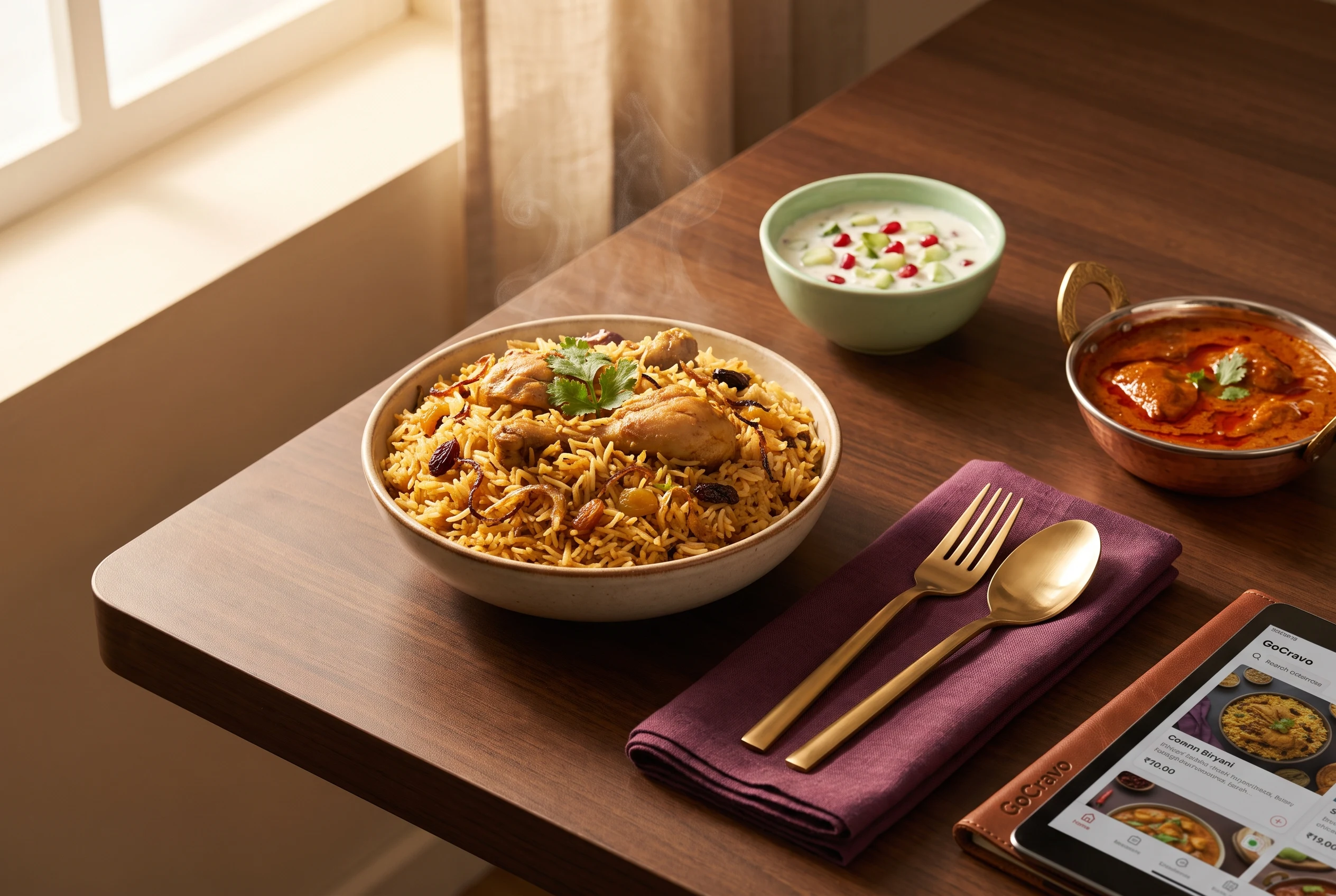
Searching for biryani in Al Warqa can bring up many menus that use the same dish name for very different plates. A better order starts by checking style, rice, portion and preparation time—not simply picking the first result.
Identify the biryani style
Look for a regional description. Hyderabadi usually signals basmati, dum aroma and layered masala. Malabar or Thalassery points toward Kerala-style short-grain rice and a gentler ghee-led profile. Ambur and Dindigul indicate Tamil styles with seeraga samba rice and more tang.
Our guide to eight biryani styles makes these differences easier to spot.
Check the Al Warqa delivery area
Al Warqa is divided into several sectors, and a restaurant that appears nearby may not serve every address directly. Confirm the exact delivery area before building a large cart. During evening and weekend peaks, order earlier if the restaurant cooks rice in limited batches.
Estimate portions honestly
A standard restaurant biryani is often intended as one substantial meal, but portion sizes vary widely. For a family order, ask whether the restaurant offers a family pack and what accompaniments are included. Raita, pickle and gravy can change how complete the meal feels.
Protect the texture
Biryani continues steaming inside a closed delivery container. Once it arrives, open the lid briefly and fluff only the top layer. Avoid mixing aggressively, which can break long basmati grains or compress softer kaima rice.
Build a useful comparison
When trying a new Al Warqa kitchen, note the actual regional style, spice level, meat tenderness, rice texture, portion and arrival time. That record is more valuable than a generic “best biryani” list because it reflects what you and your household enjoy.
For a broader view of nearby Indian dishes, visit our Al Warqa and Al Qusais Indian food guide.
 AI-generated image
 AI-generated image