
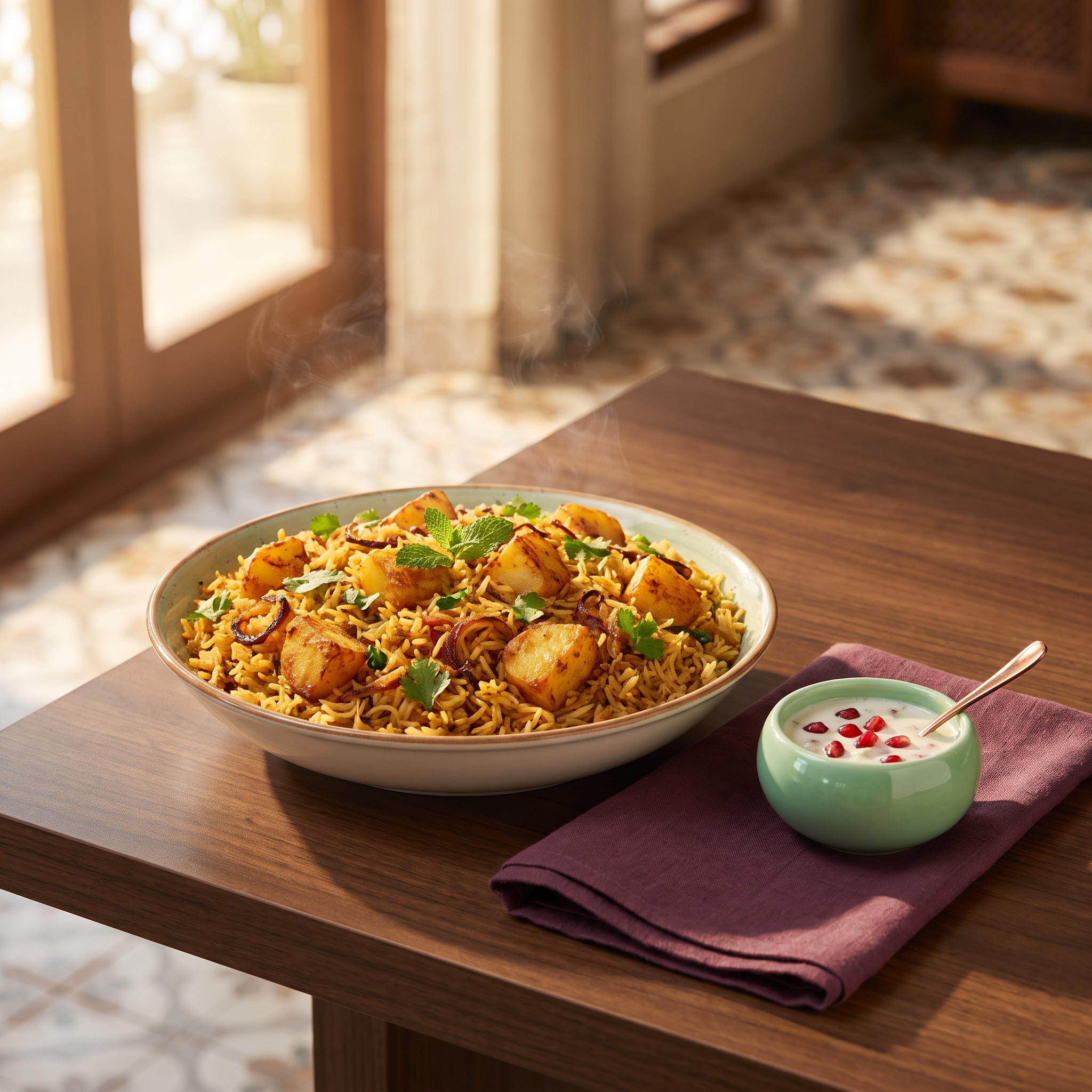
For many biryani lovers, the potato is not an extra—it is the piece everyone looks for first. Aloo absorbs stock, spice and meat juices during dum cooking, becoming soft inside while holding the flavour of the entire pot.
Why put potato in biryani?
Potato adds more than bulk. Its mild flavour balances chilli and acidity, while its starch makes a rich biryani feel comforting. A well-cooked piece should remain intact on the plate but yield easily to a spoon. Browning or par-cooking it before layering helps it develop flavour without collapsing into the rice.
Karachi and Kolkata traditions
Potato appears in many Karachi-style family biryanis, especially in recipes shaped by migration and household tradition. It is also one of the defining pleasures of Kolkata biryani, where the potato sits alongside delicately perfumed rice, meat and often an egg. The two dishes are not identical: Karachi versions are frequently hotter and more masala-forward, while Kolkata biryani is usually gentler and more aromatic.
Chicken, mutton or meat-free?
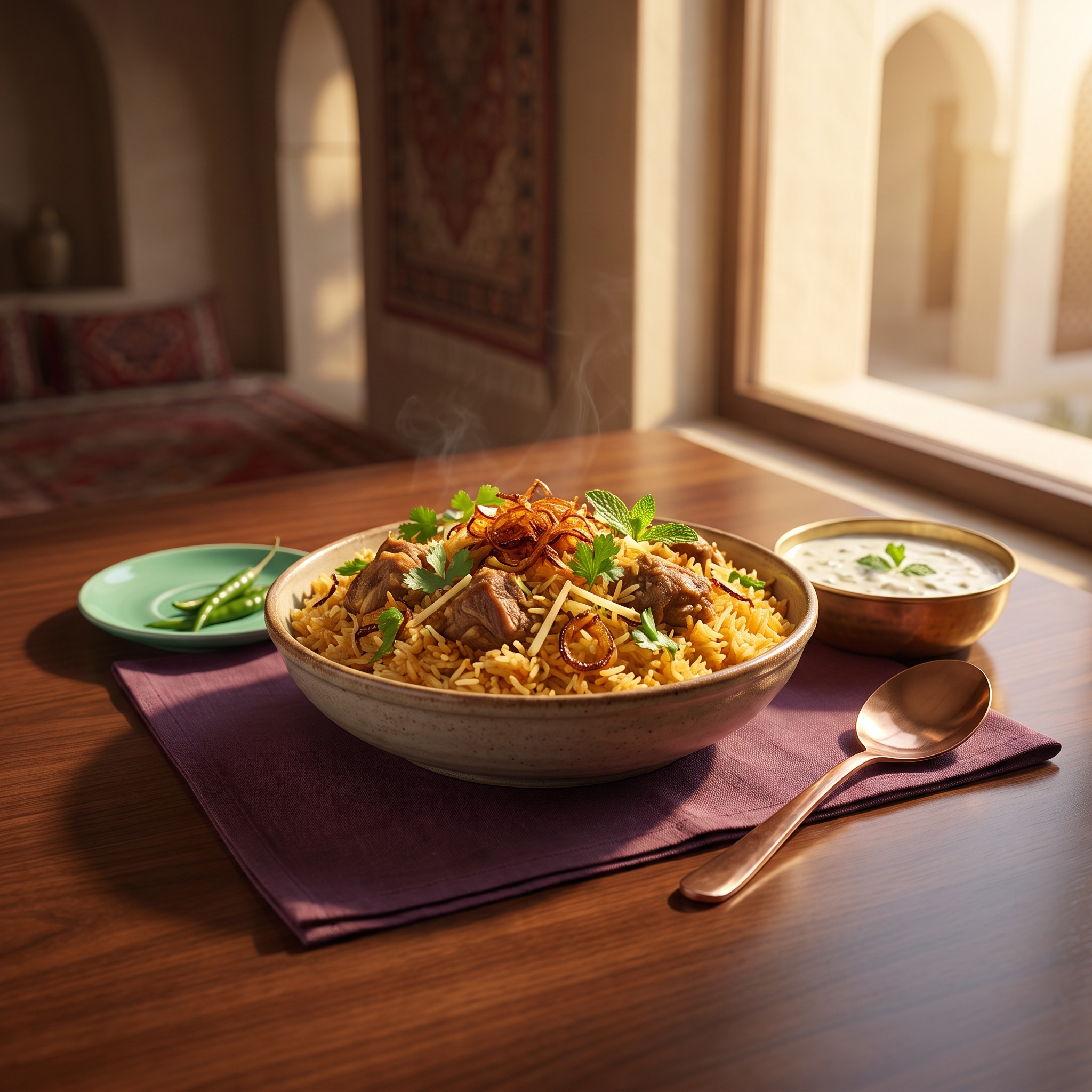
Chicken-and-potato is an approachable combination for a family order. Mutton gives the potato a deeper savoury flavour. Aloo biryani can also be a satisfying vegetarian main when the rice is layered with herbs, fried onion and a properly developed masala rather than treated as plain vegetable rice.
Ordering potato biryani in Dubai
Menu descriptions do not always mention potato, so ask the restaurant before ordering. Check whether it is Karachi, Sindhi, Kolkata or house style, and whether egg is included. For group orders around Al Qusais and Al Warqa, request a family tray and confirm the number of potato pieces so everyone gets a fair share.
Compare Pakistani biryani with our Kolkata biryani guide, then explore the full Pakistani food collection.
 AI-generated image
 AI-generated image
 AI-generated image
 AI-generated image
 AI-generated image
 AI-generated image