
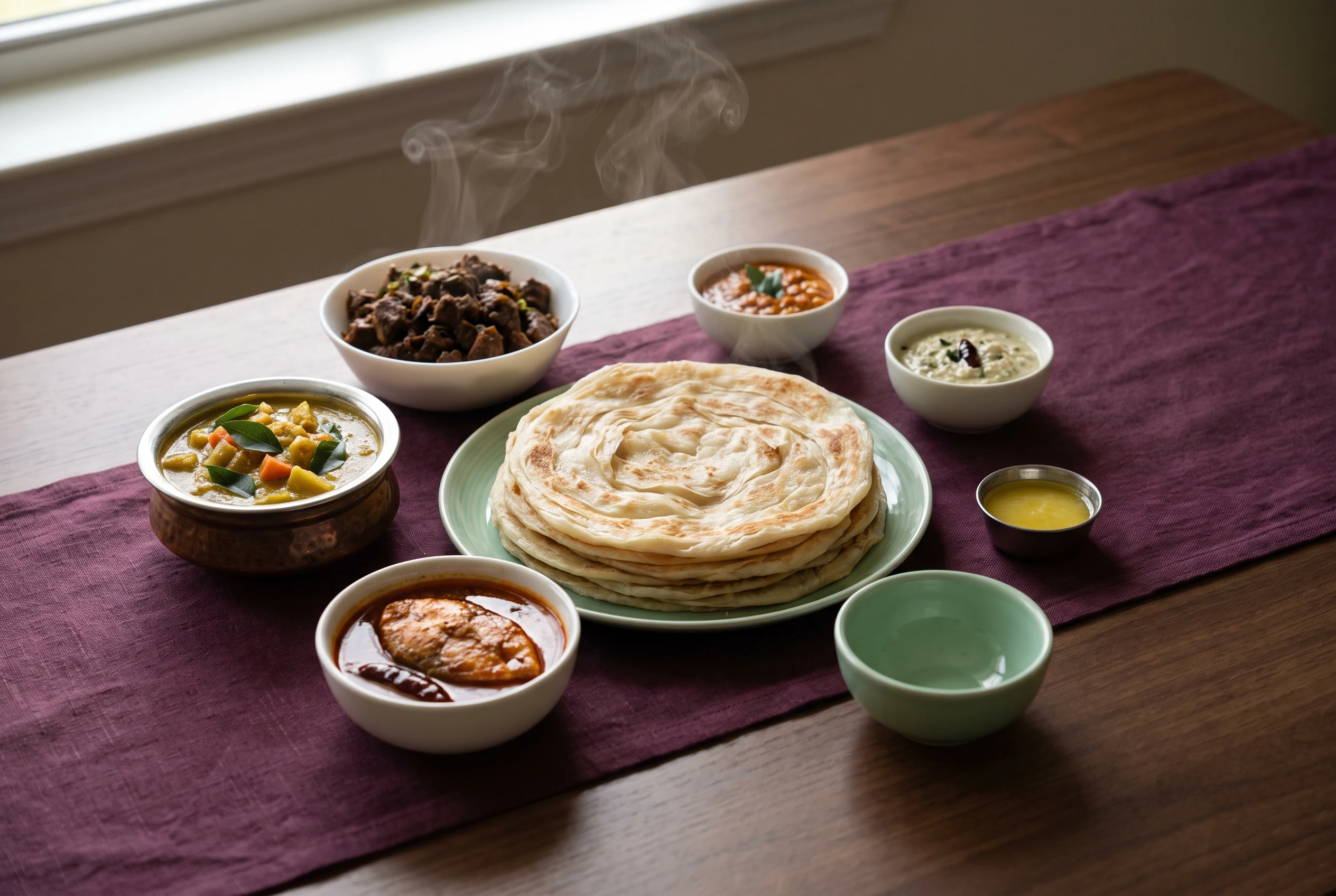
Kerala porotta is a layered flatbread with a crisp surface, soft centre and unmistakable pull-apart structure. It is not the same as North Indian paratha: the dough, shaping and repeated coiling create a different texture.
Where the layers come from
The dough is kneaded until elastic, rested, stretched into a very thin sheet and lightly coated with fat. It is then gathered or pleated, rolled into a coil and rested again before being flattened and cooked on a hot griddle.
After cooking, the porotta is often gently compressed from the sides. This loosens the coiled structure and separates the layers without tearing the bread apart.
The ideal texture
A good porotta should be browned in spots and crisp at the outer edges, but flexible enough to pull apart. It should not be cracker-dry, excessively oily or dense in the centre. Freshness matters: the texture is at its best soon after leaving the griddle.
What to eat with porotta
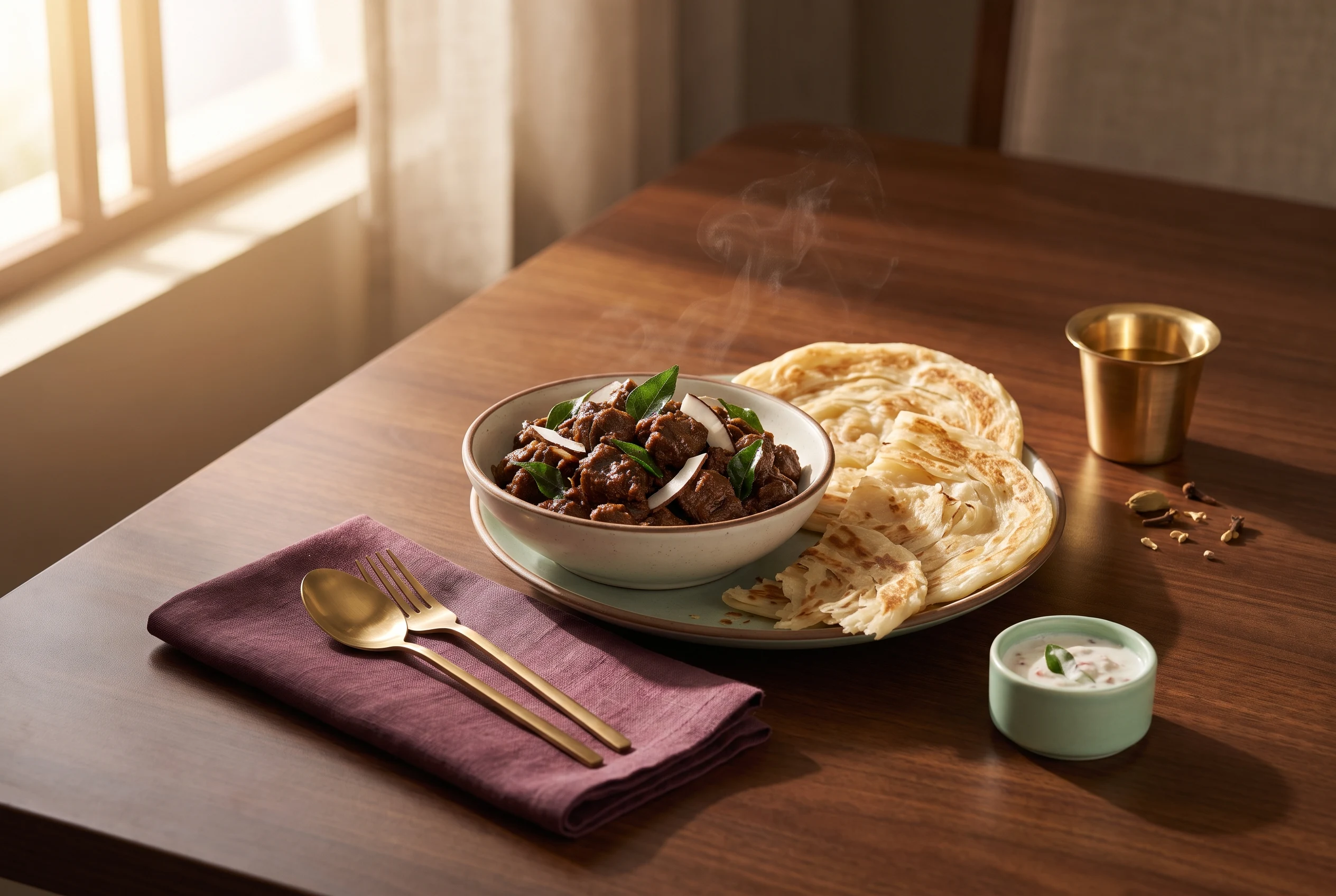
Porotta works especially well with curries that cling to its layers. Beef varattiyathu is a classic dry pairing; chicken roast, egg curry, vegetable kurma and fish curry also work well. A drier roast preserves more contrast, while a looser curry turns the bread softer and richer.
Read our beef varattiyathu and porotta guide for the classic combination.
How to order porotta for delivery
Ask for porotta and curry to be packed separately. For a short journey within Al Qusais or Al Warqa, wrapping the bread in paper before placing it in a container can help manage condensation. If reheating, use a dry pan for a minute on each side rather than a microwave, which can make layers chewy.
For two diners, start with four porottas plus one main curry and a lighter side. Add more bread for a larger appetite, but avoid over-ordering: porotta is most enjoyable while fresh.
 AI-generated image