
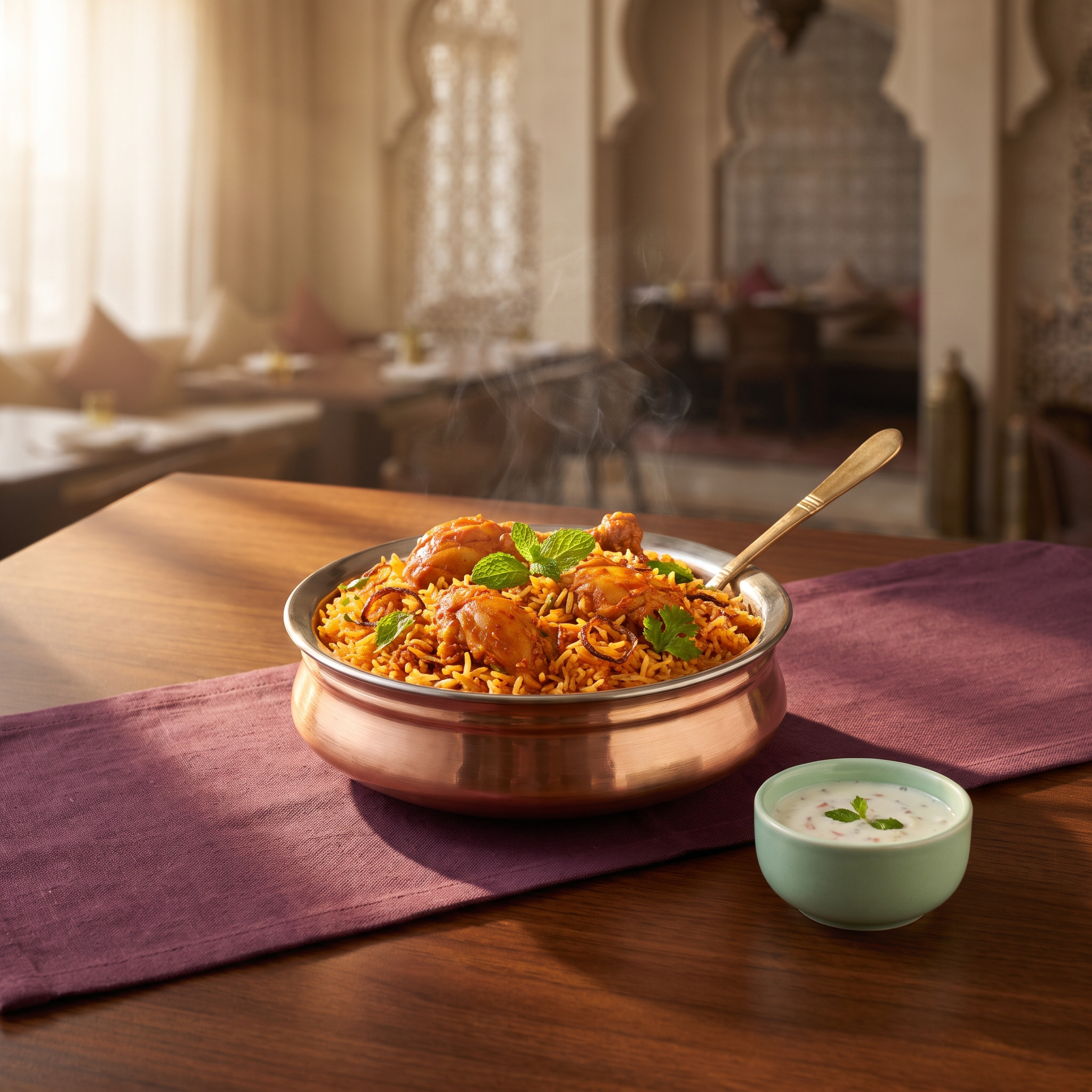
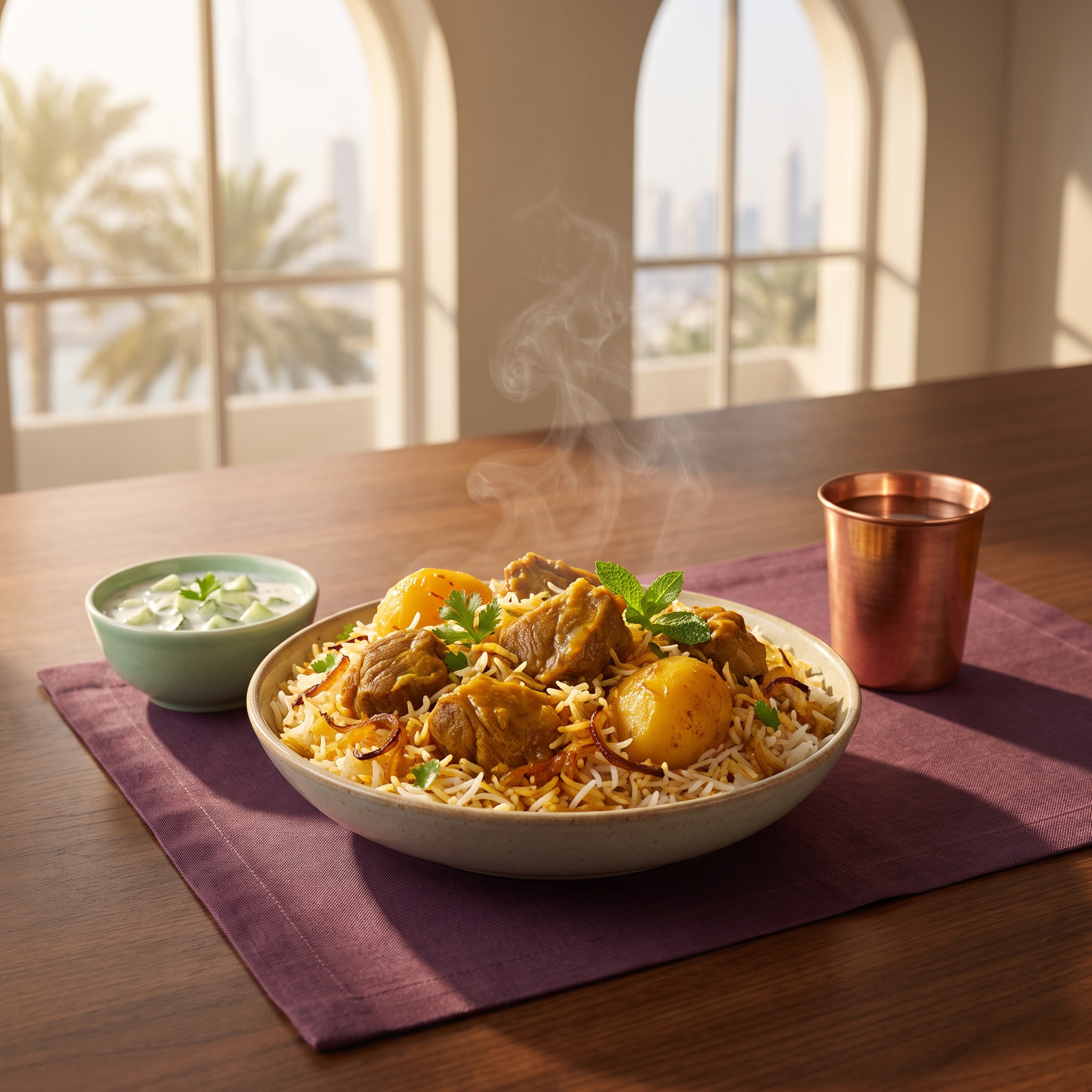
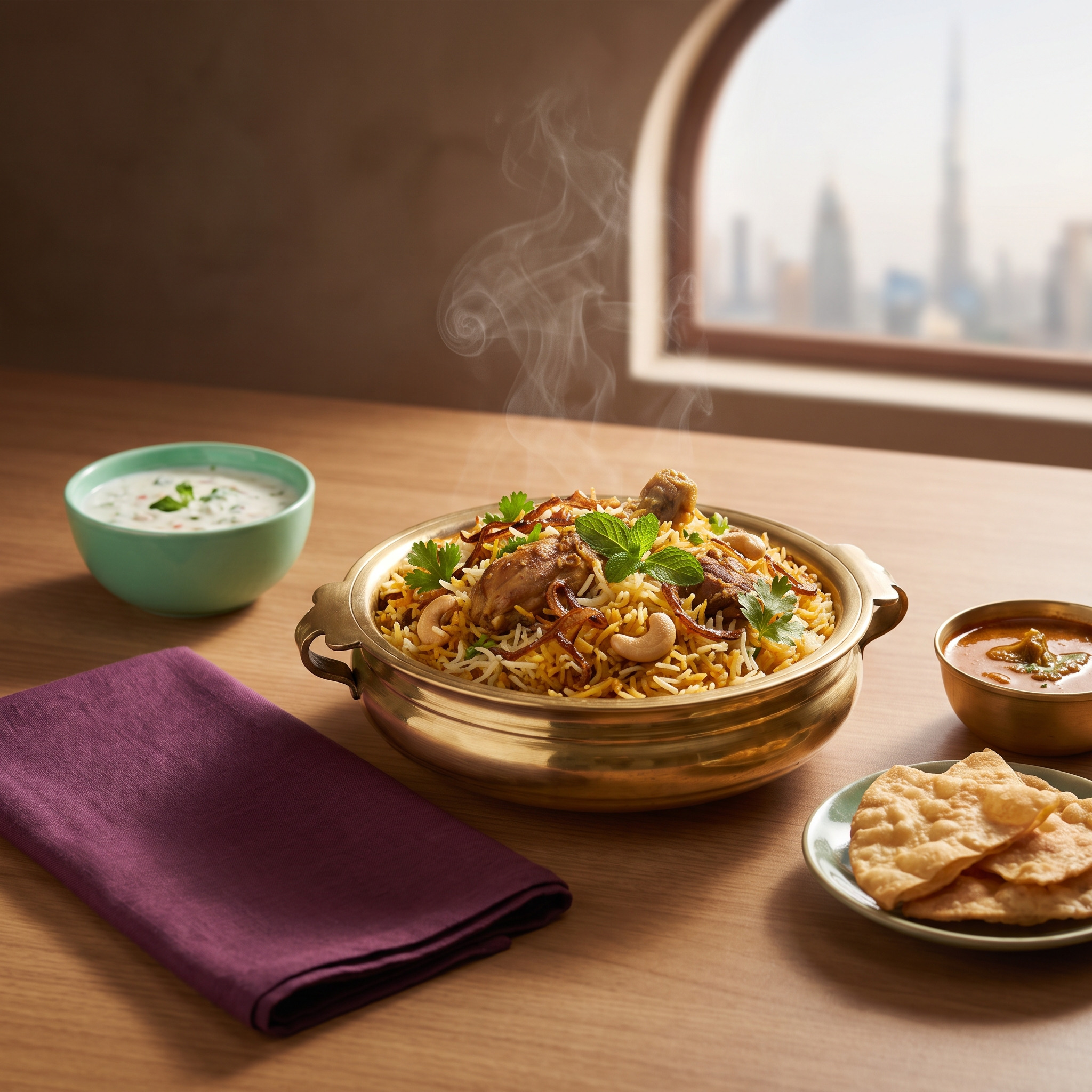
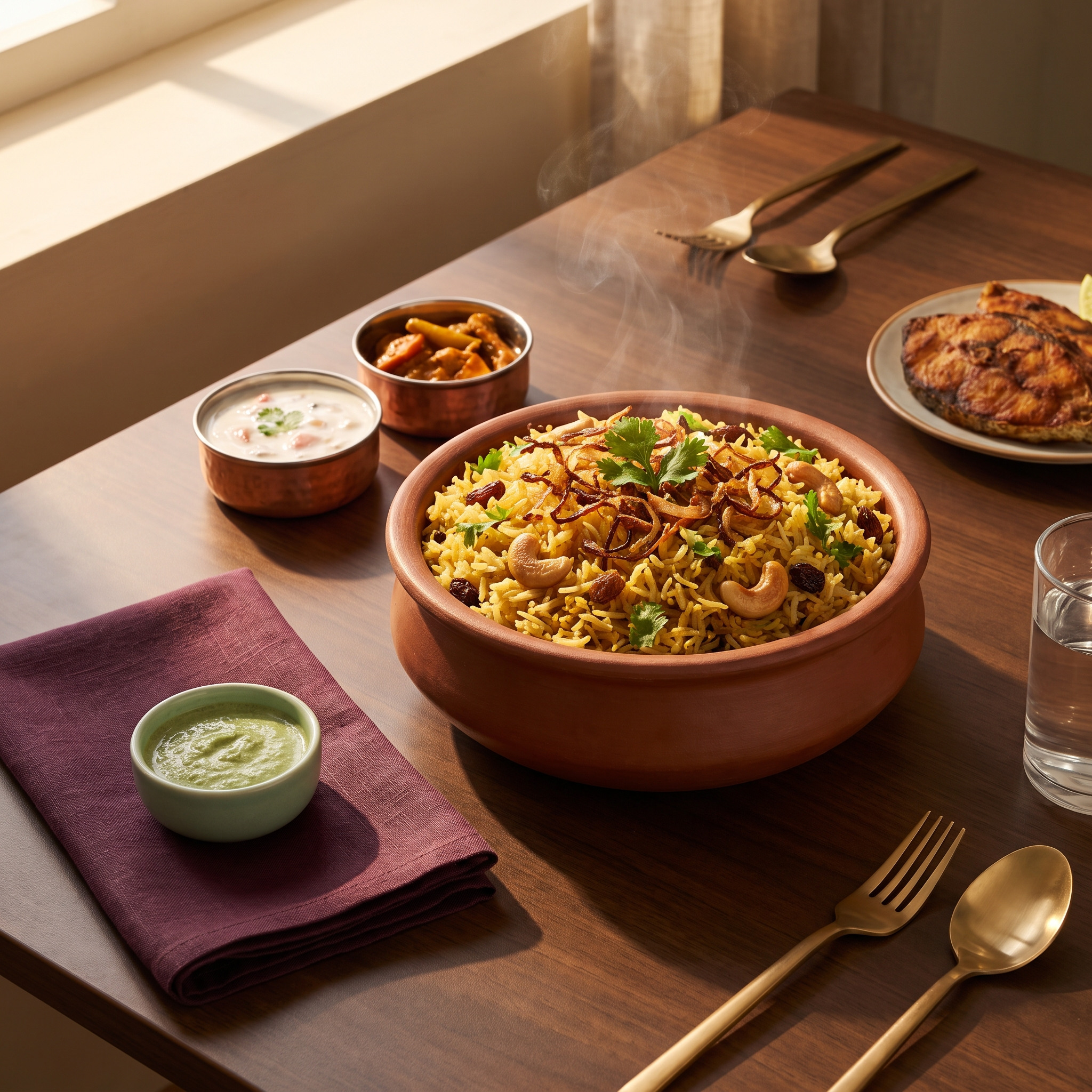
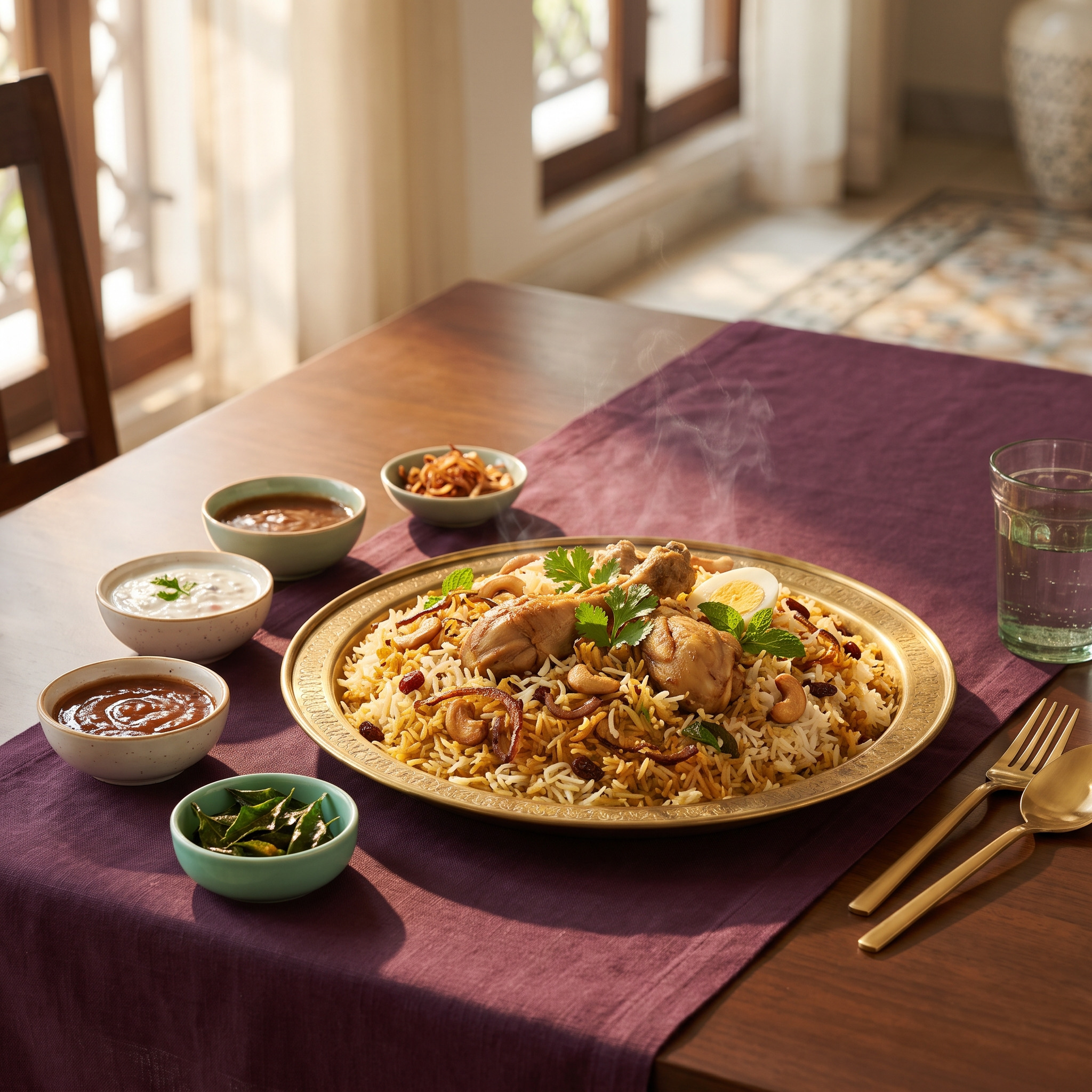
Ambur biryani is associated with the Arcot region of Tamil Nadu and is commonly recognised by small seeraga samba rice, a direct chilli-led masala and a practical restaurant style that feels different from layered basmati biryani.
Why seeraga samba matters
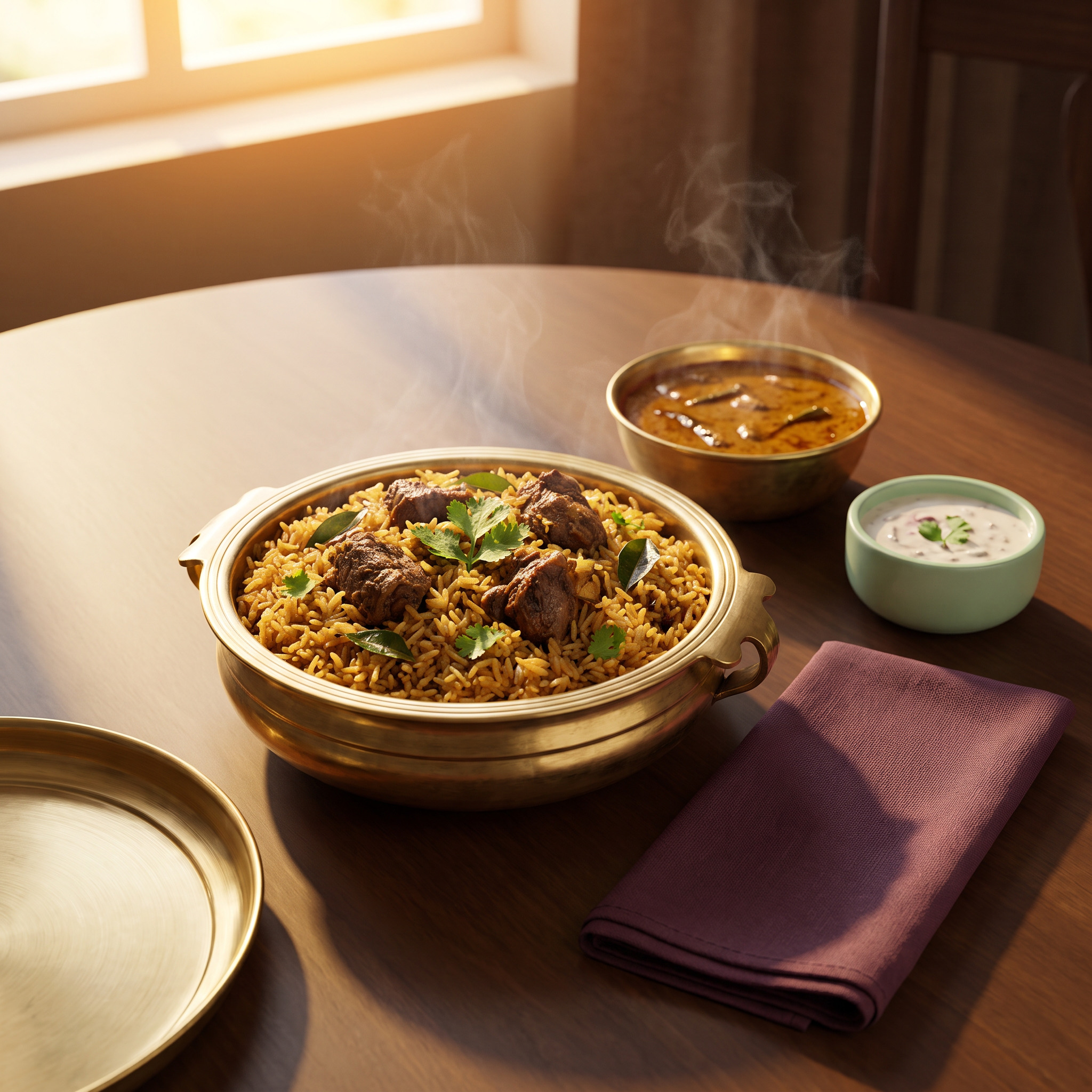
Seeraga samba is a small aromatic rice that absorbs flavour throughout the grain. Compared with basmati, it produces a more compact mouthful and brings the masala into closer contact with every piece of chicken or mutton.
A focused masala
Ambur biryani often gets its warm red-orange tone from dried chilli paste. The spice profile can feel direct and savoury rather than heavily perfumed. Tomato, curd, herbs and whole spices vary with the kitchen, but the rice-and-meat relationship remains central.
The brinjal curry pairing
Brinjal curry and onion raita are classic accompaniments. The soft, tangy brinjal adds moisture and contrast to the rice. Try a small amount first so you can judge the biryani's seasoning before combining everything.
Ambur versus Dindigul
Both styles are associated with seeraga samba rice, but Dindigul biryani is frequently described as tangier and pepperier. Ambur often puts dried chilli flavour and the brinjal accompaniment more visibly at the centre.
Continue with our Dindigul biryani guide for a side-by-side comparison.
Ordering Ambur biryani in Dubai
Confirm that the restaurant actually uses seeraga samba rice; the grain is one of the most meaningful signs of the style. Ask whether brinjal curry and raita are included and whether the listed spice level can be adjusted.
For delivery, keep curry separate until serving. If the rice needs reheating, use gentle covered heat rather than adding brinjal curry early, which can make it too soft.
Return to the complete biryani style guide for six more regional options.
 AI-generated image
 AI-generated image
 AI-generated image
 AI-generated image
 AI-generated image
 AI-generated image
 AI-generated image