
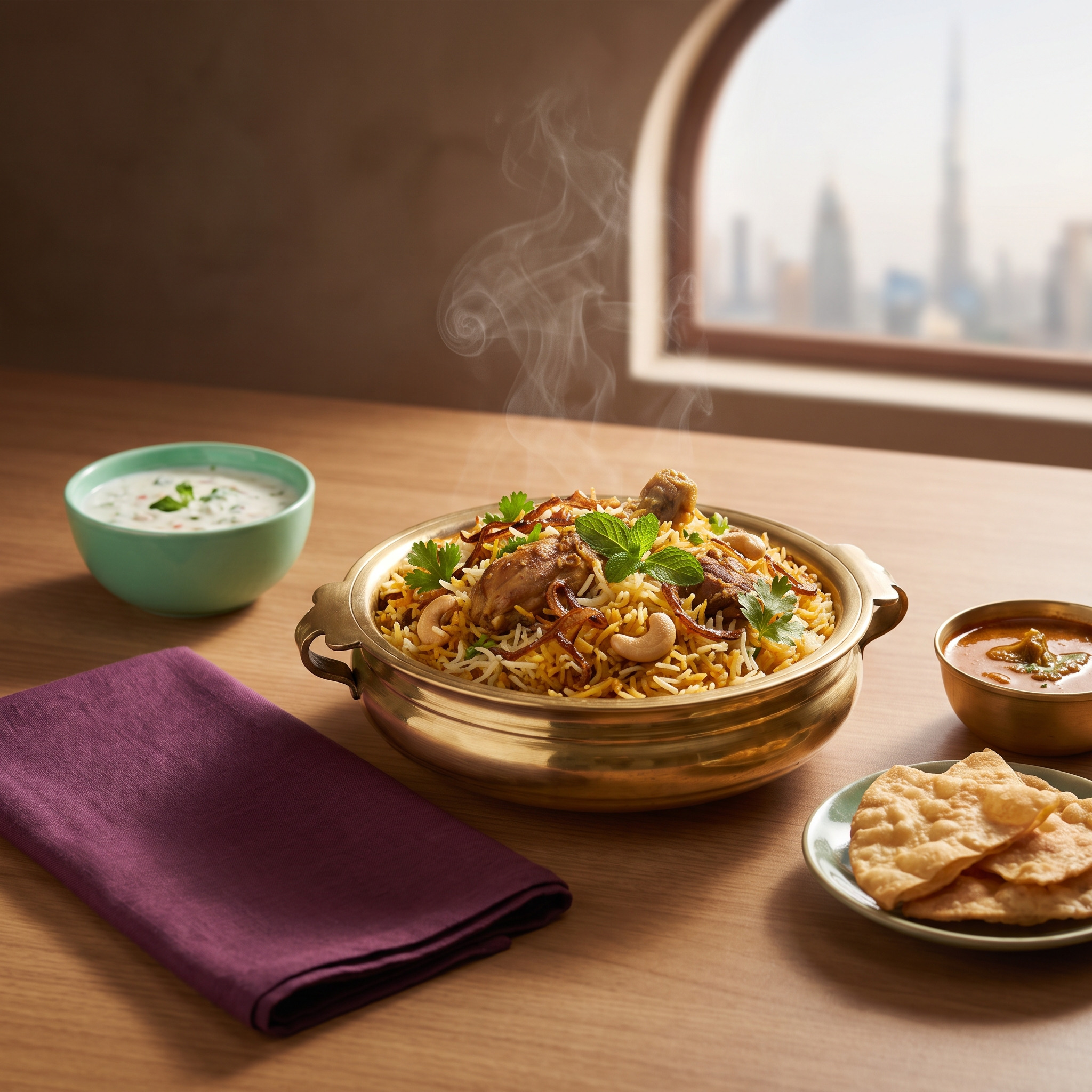
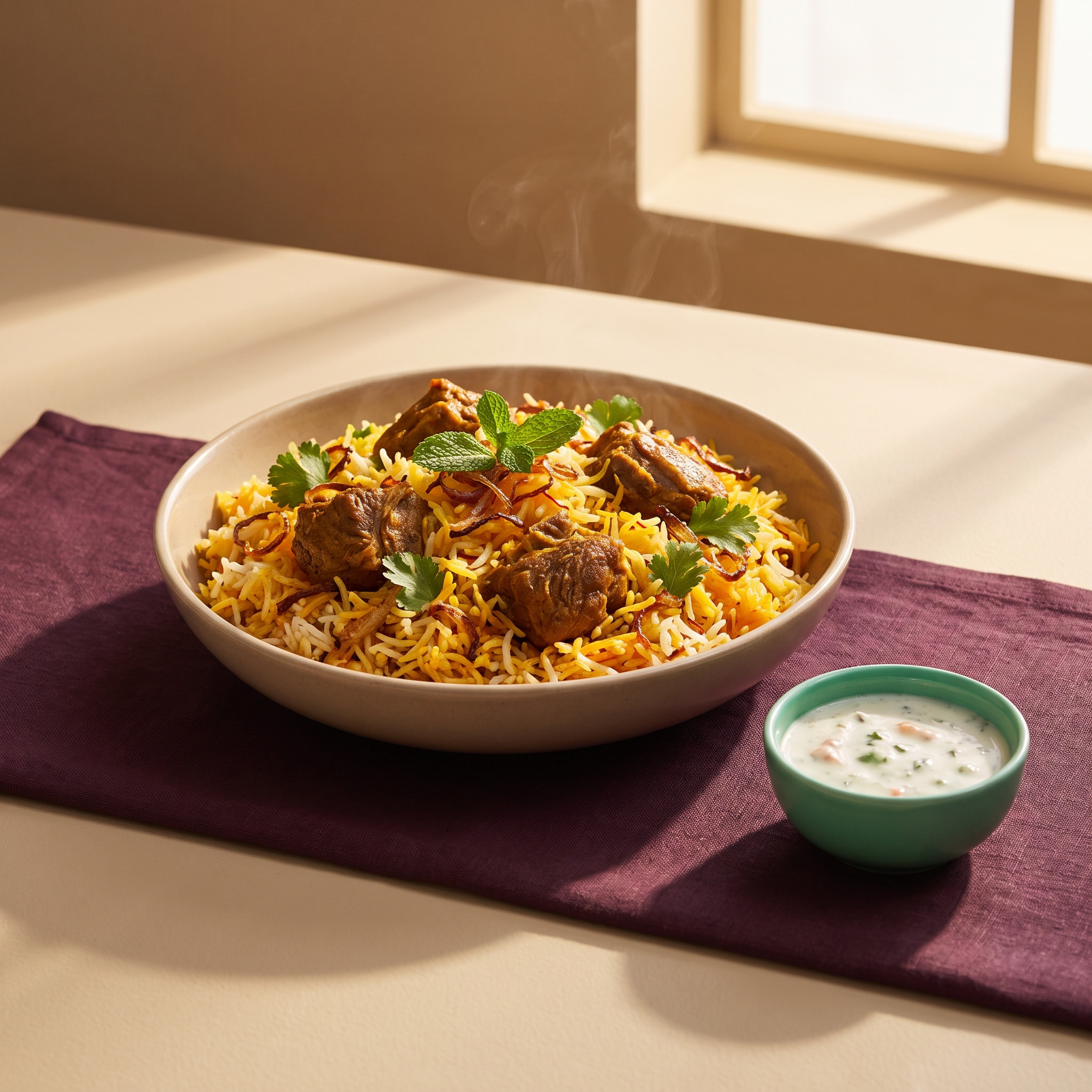
Lucknowi biryani, also called Awadhi biryani, is built around fragrance and measured seasoning. It is often milder in chilli than Hyderabadi biryani, but “mild” should not be mistaken for plain: stock, whole spices and dum cooking create depth.
The role of yakhni
Yakhni is a seasoned meat stock. In many Awadhi methods, meat is simmered with whole spices and the strained stock is used to flavour the rice. This creates a connection between meat and grain without covering the rice in a thick masala.
A refined dum finish
Partially cooked rice and prepared meat are layered in a pot, sometimes with saffron milk, floral water or other aromatics, then sealed for dum. The goal is a soft, perfumed plate with separate grains and tender meat.
The exact perfume should feel controlled. Too much floral essence can overwhelm the food, while too little stock flavour leaves the rice disconnected from the meat.
Lucknowi versus Hyderabadi
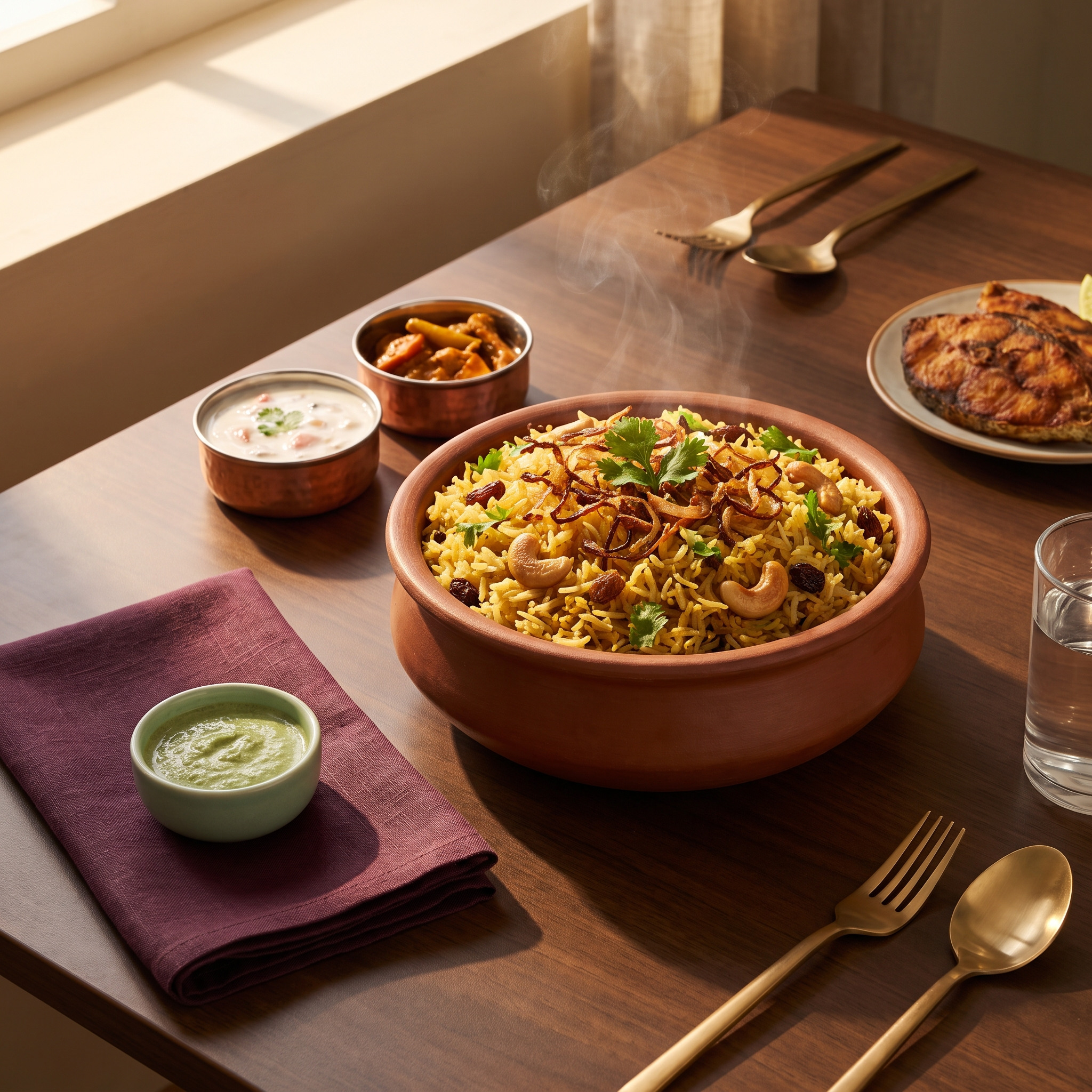
Lucknowi biryani commonly feels subtler, with stock and gentle aroma leading the experience. Hyderabadi biryani often creates a stronger contrast between spiced meat and basmati rice, especially in kacchi dum preparations.
Compare the techniques in our Hyderabadi biryani guide.
What to expect when ordering in Dubai
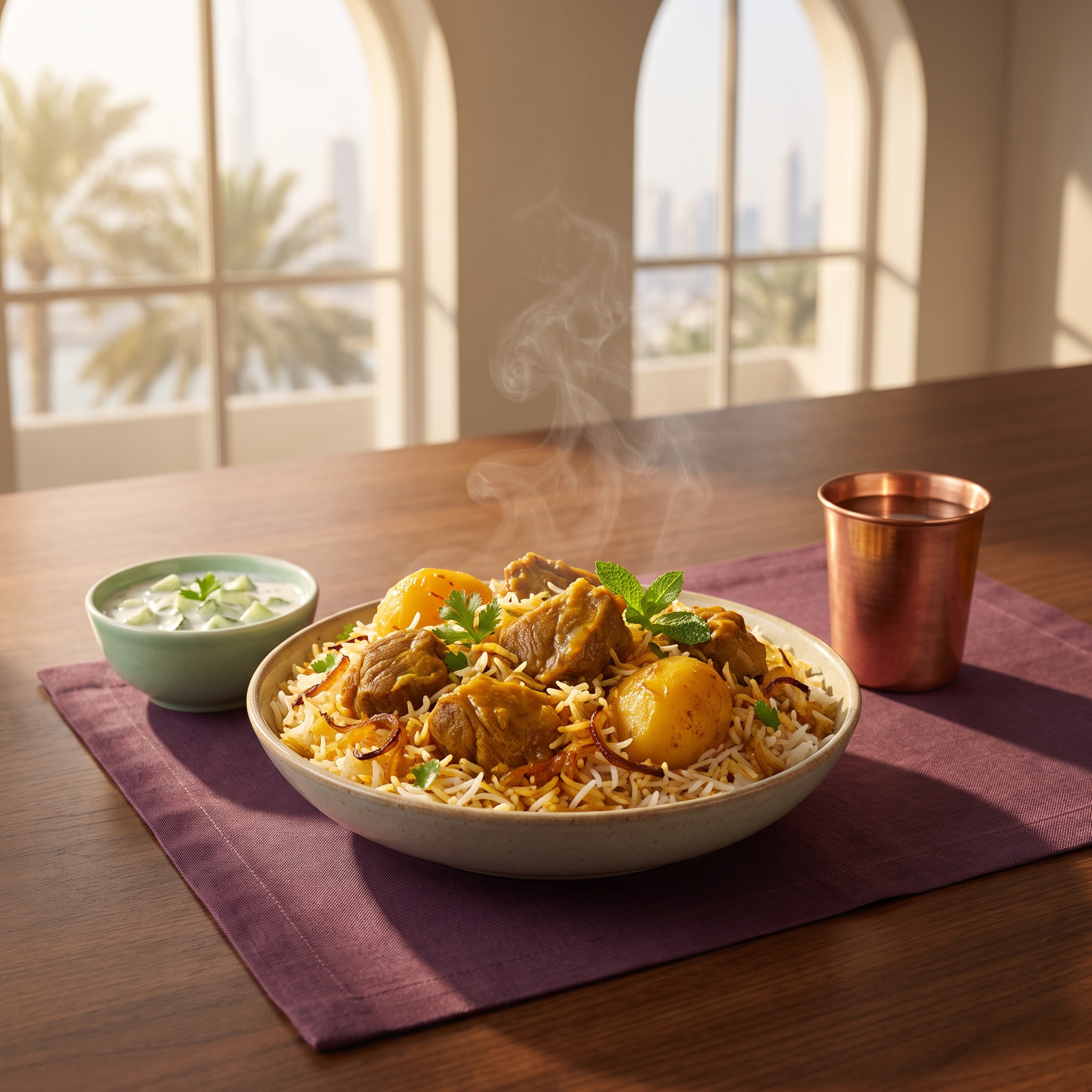
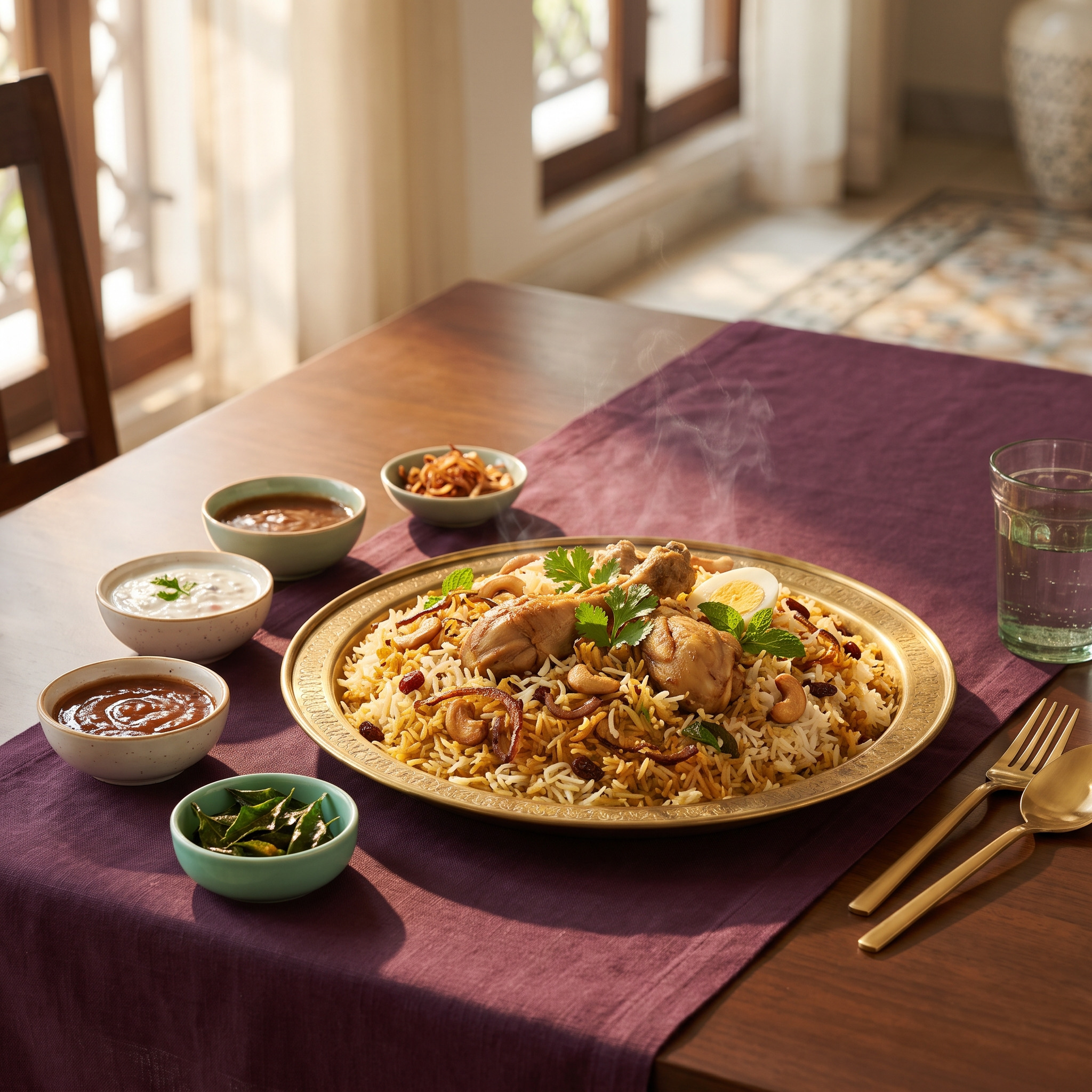
Look for menu words such as Awadhi, Lucknowi, yakhni or dum pukht. Ask whether the kitchen uses mutton or chicken and whether the meat is bone-in. A light raita or salad is usually enough; a powerful gravy can hide the style's measured aroma.
For delivery, keep the rice covered until the meal begins, then loosen it gently from the side rather than stirring the entire container. This protects the long grains and layered presentation.
See how this style connects to Kolkata biryani, or return to all eight biryanis.
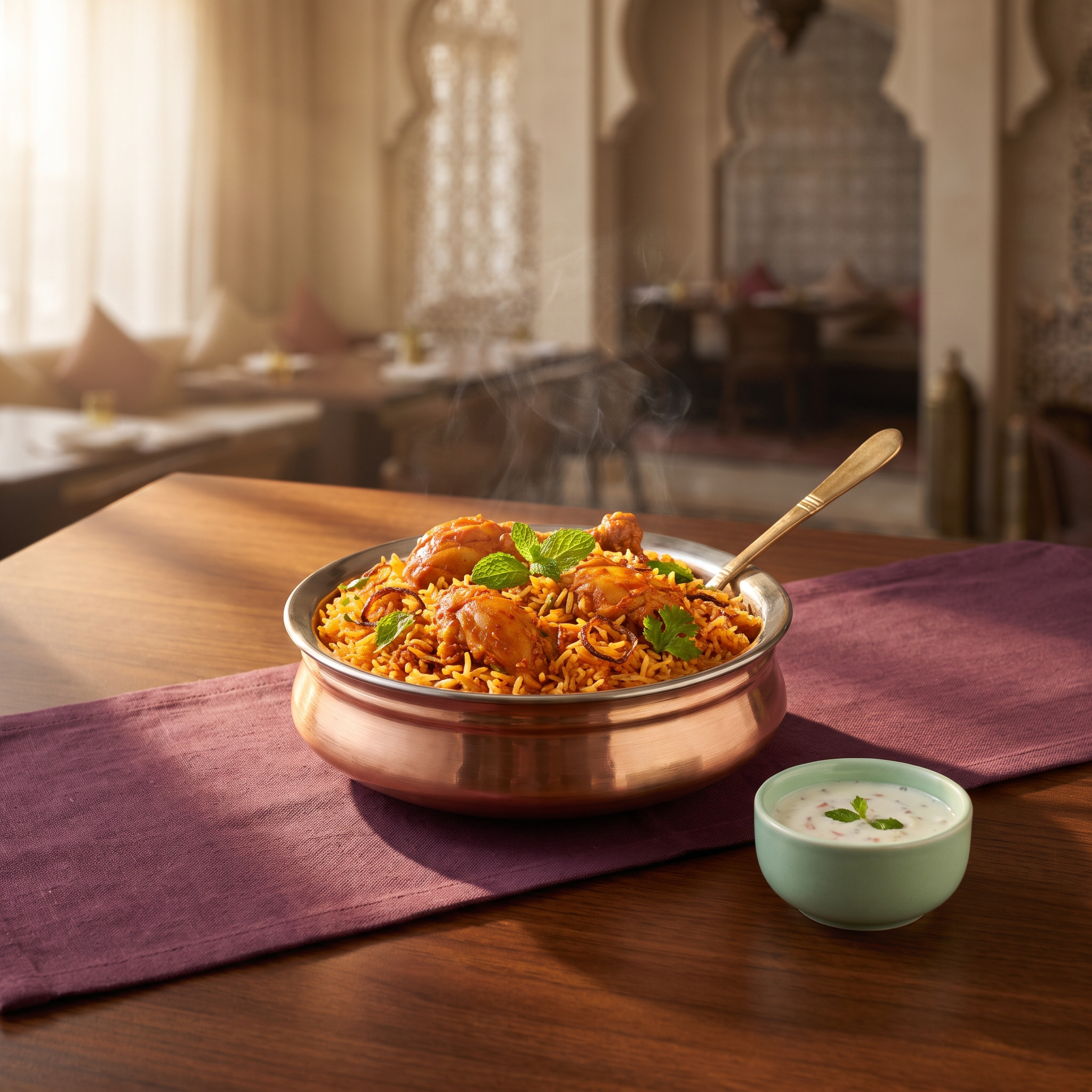 AI-generated image
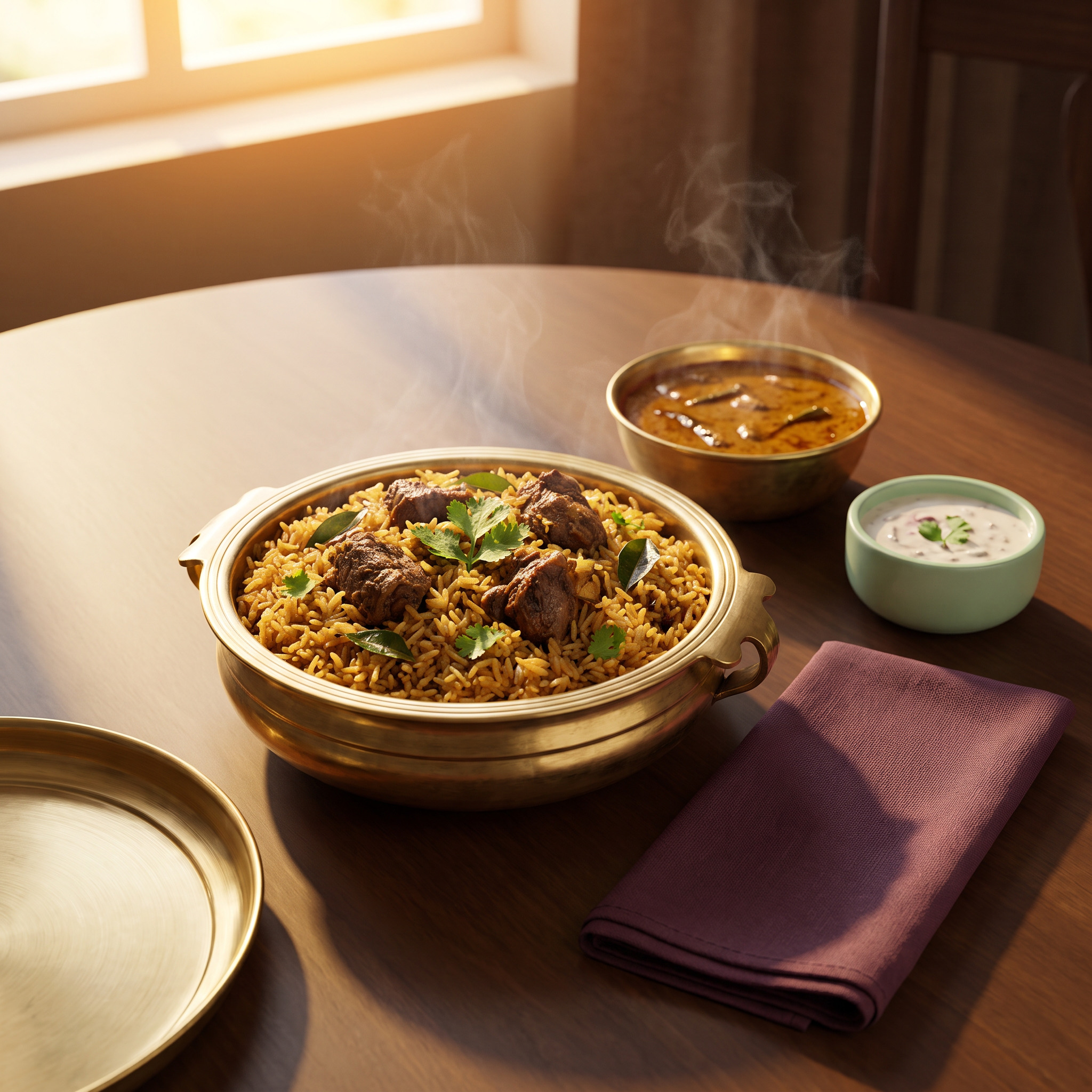 AI-generated image
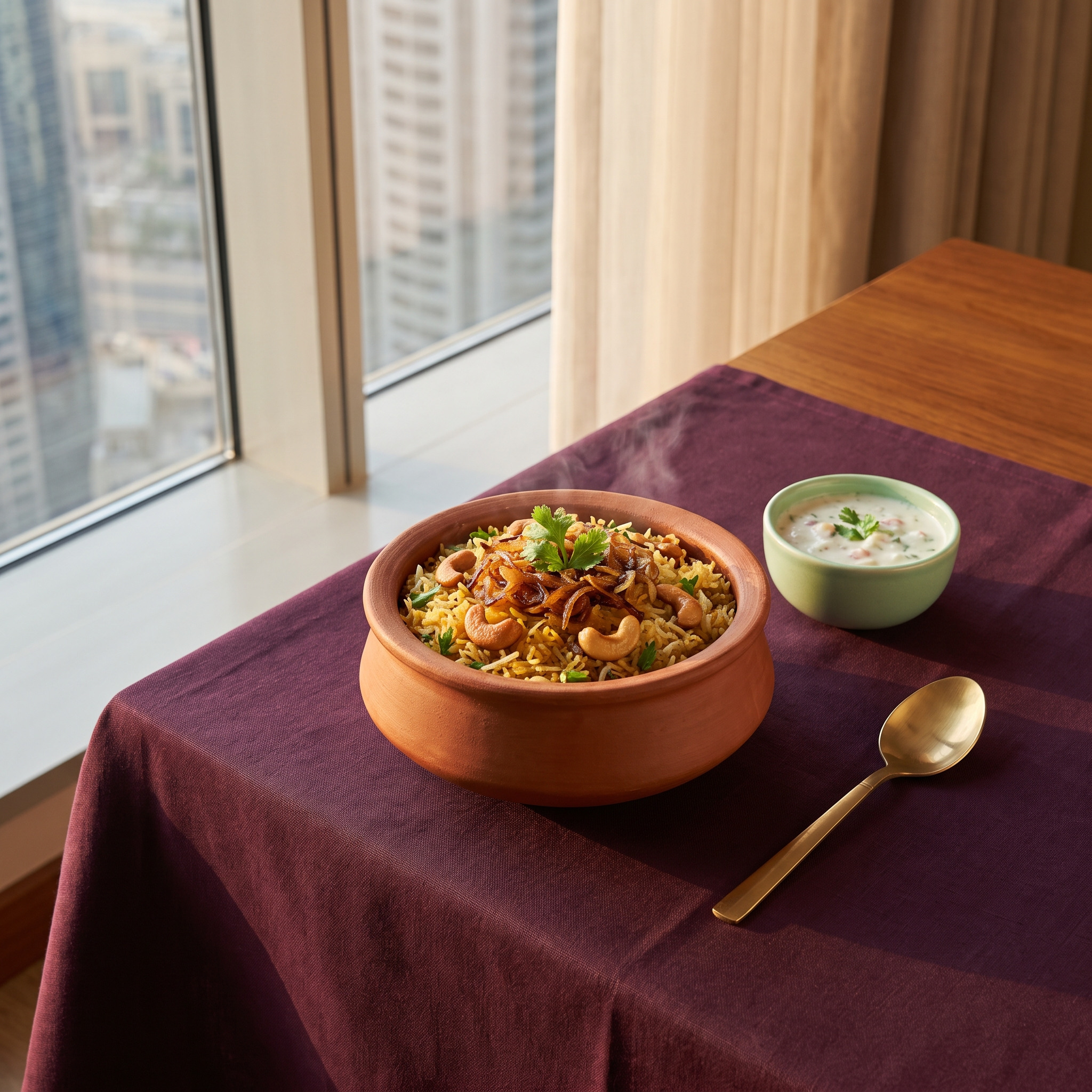 AI-generated image
 AI-generated image
 AI-generated image
 AI-generated image
 AI-generated image