
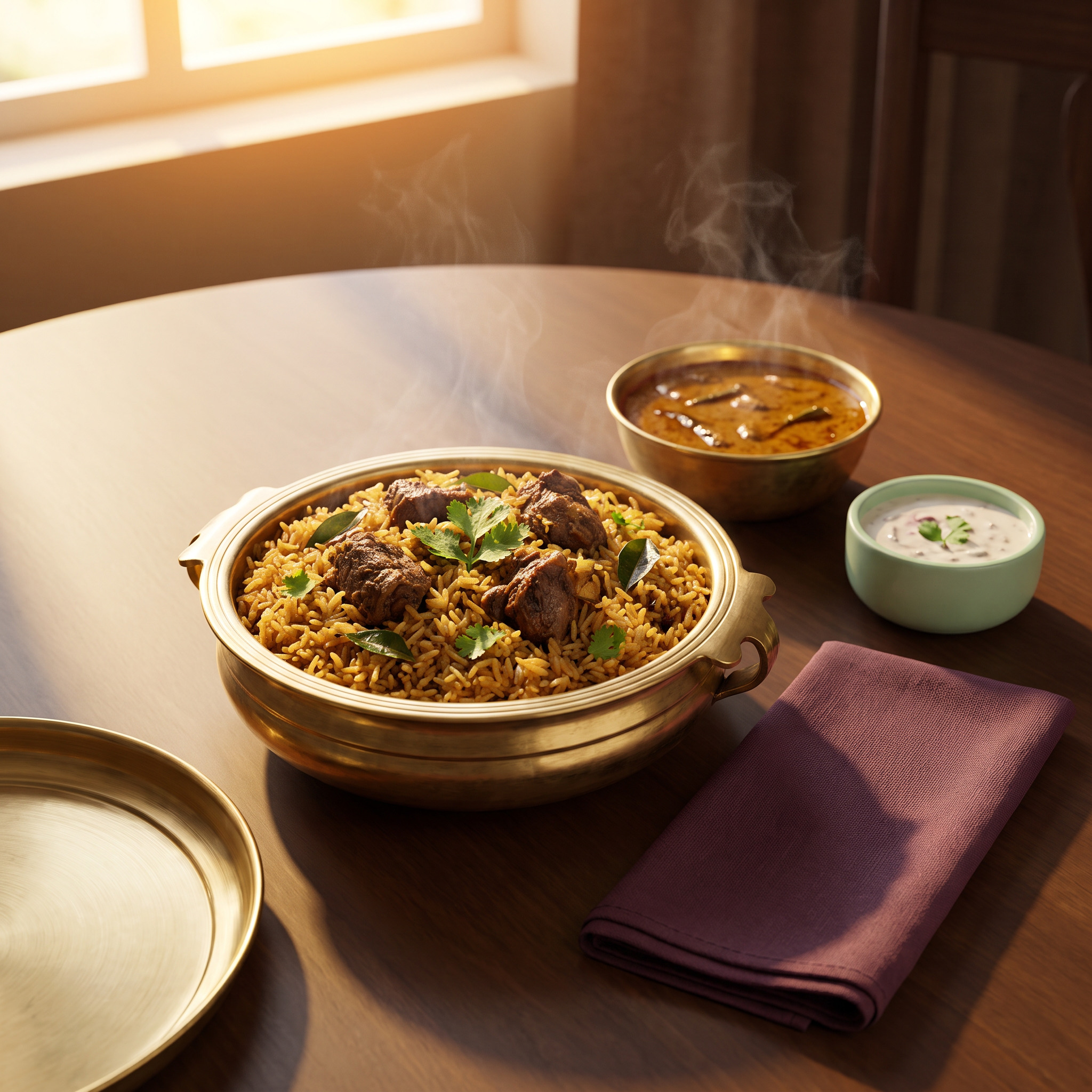
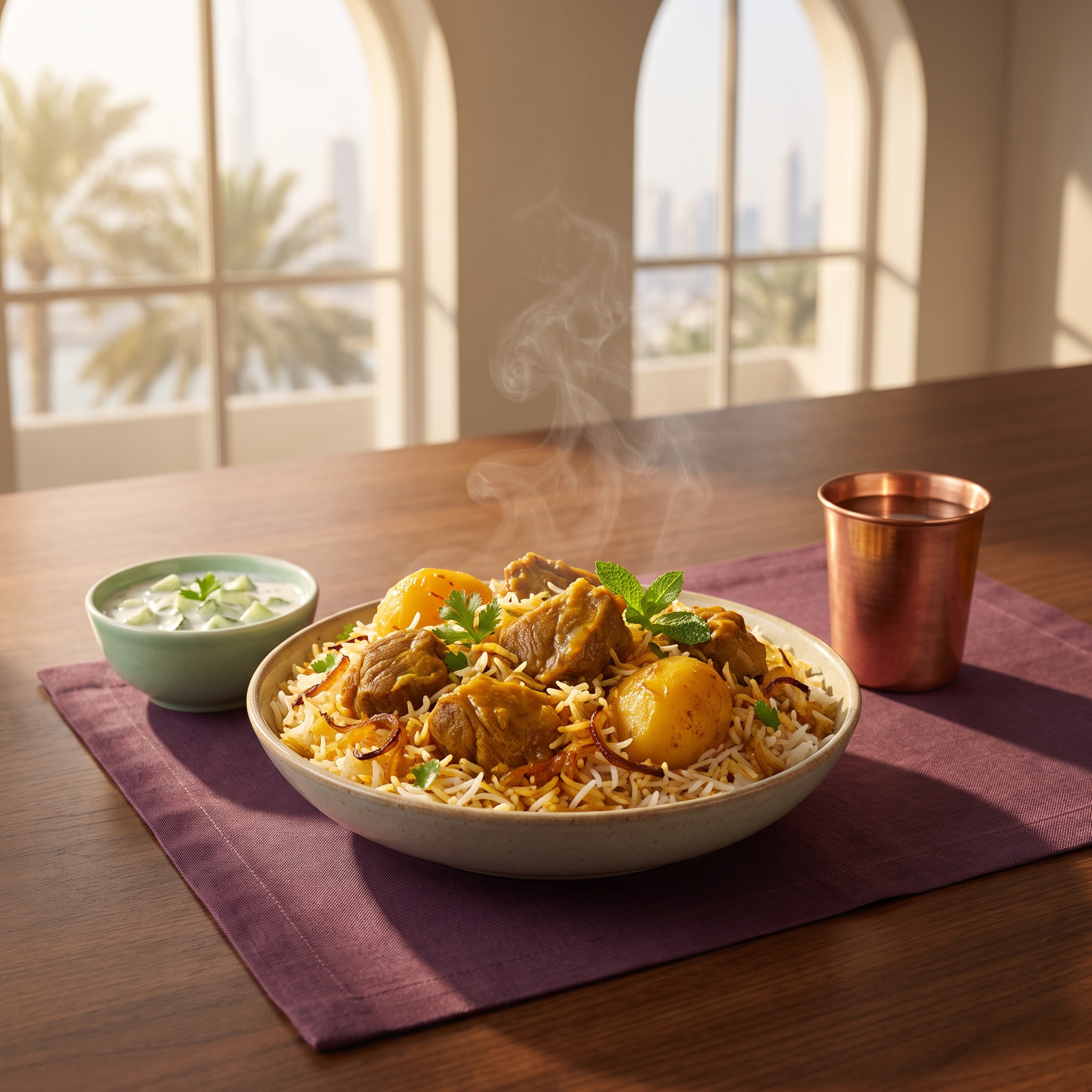
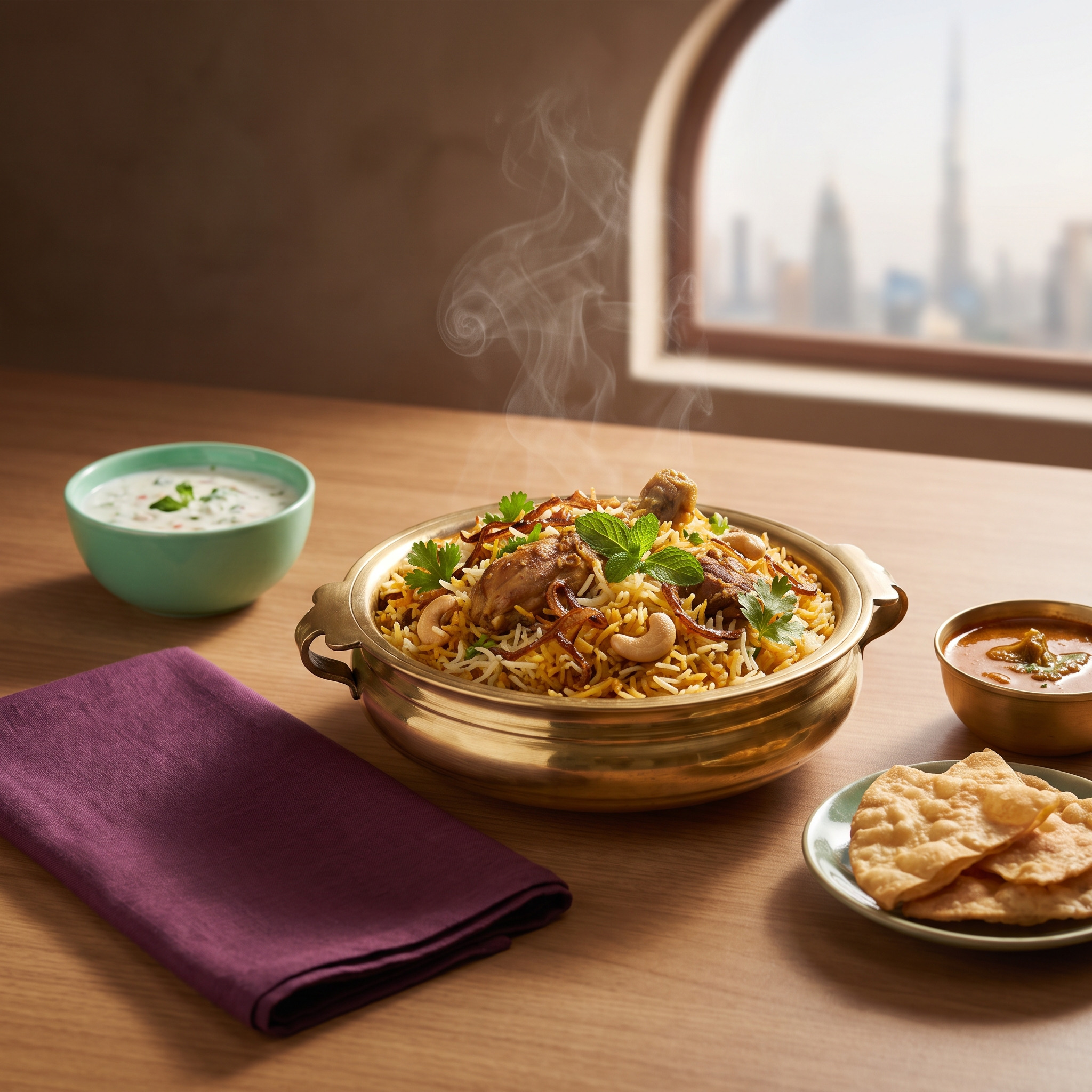
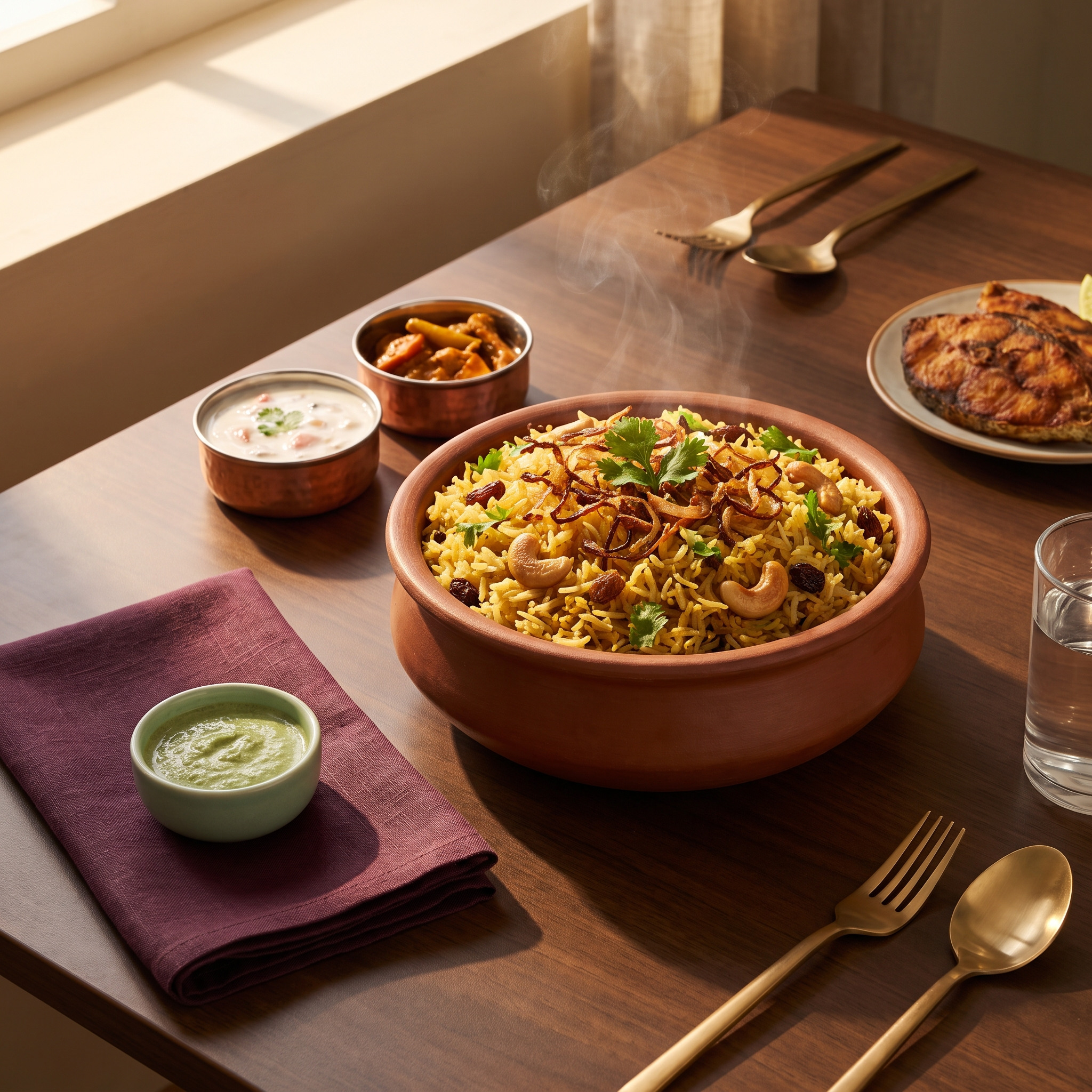
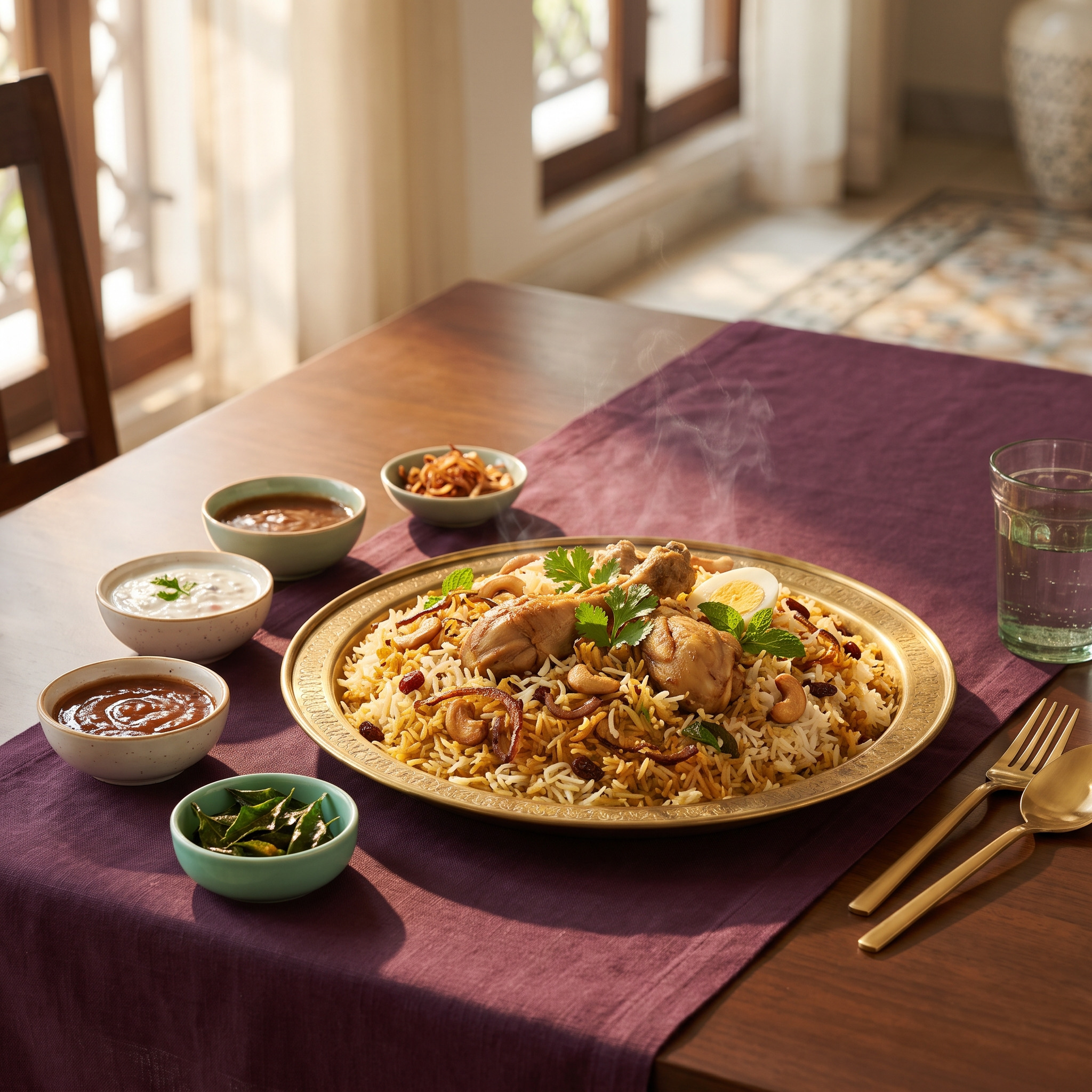
Dindigul biryani comes from Tamil Nadu and is known for a lively combination of small seeraga samba rice, tang, pepper and deeply seasoned meat. It does not aim for the long-grain, layered appearance of Hyderabadi biryani.
Small rice, concentrated flavour
Seeraga samba rice absorbs the cooking liquid and spice readily. Its compact grain makes each mouthful feel integrated, with the flavour distributed through the rice rather than concentrated only around the meat masala.
Where the tang comes from
Curd and lemon are commonly associated with the style, although individual recipes vary. Their acidity lifts the richness of meat and creates the bright quality diners often use to distinguish Dindigul biryani.
Pepper and chilli add warmth. A balanced version should taste lively without acidity or heat masking the rice aroma.
Dindigul versus Ambur
Both may use seeraga samba, but Dindigul often presents a tangier, pepper-forward profile. Ambur is frequently associated with dried chilli paste and brinjal curry. Restaurant recipes can overlap, so the rice and the kitchen's stated regional method are better clues than colour alone.
Read our Ambur biryani guide for the companion style.
Protein and accompaniments
Mutton and chicken are common. Onion raita helps cool the spice without overpowering the acidity. A separate brinjal or gravy side may be offered, but taste the rice first.
Ordering in Dubai
Ask whether the kitchen uses seeraga samba and whether the listed portion is individual or family size. Because small rice can soften during a long journey, choose direct delivery where possible and serve soon after arrival.
If reheating, sprinkle a teaspoon of water over an individual portion and warm it covered on low heat. Avoid repeated reheating, which reduces the grain's character.
Browse the eight-style Dubai biryani guide for more comparisons.
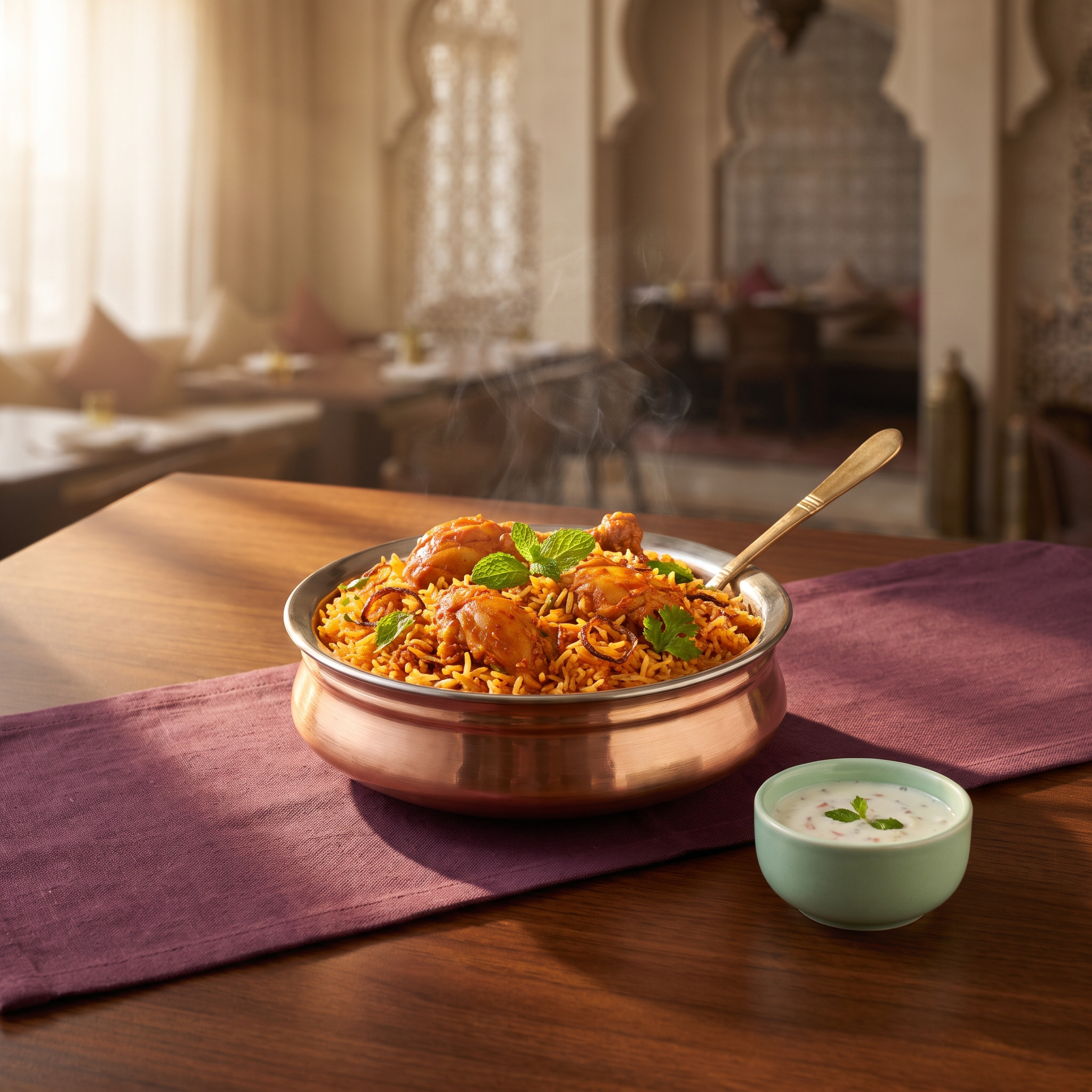 AI-generated image
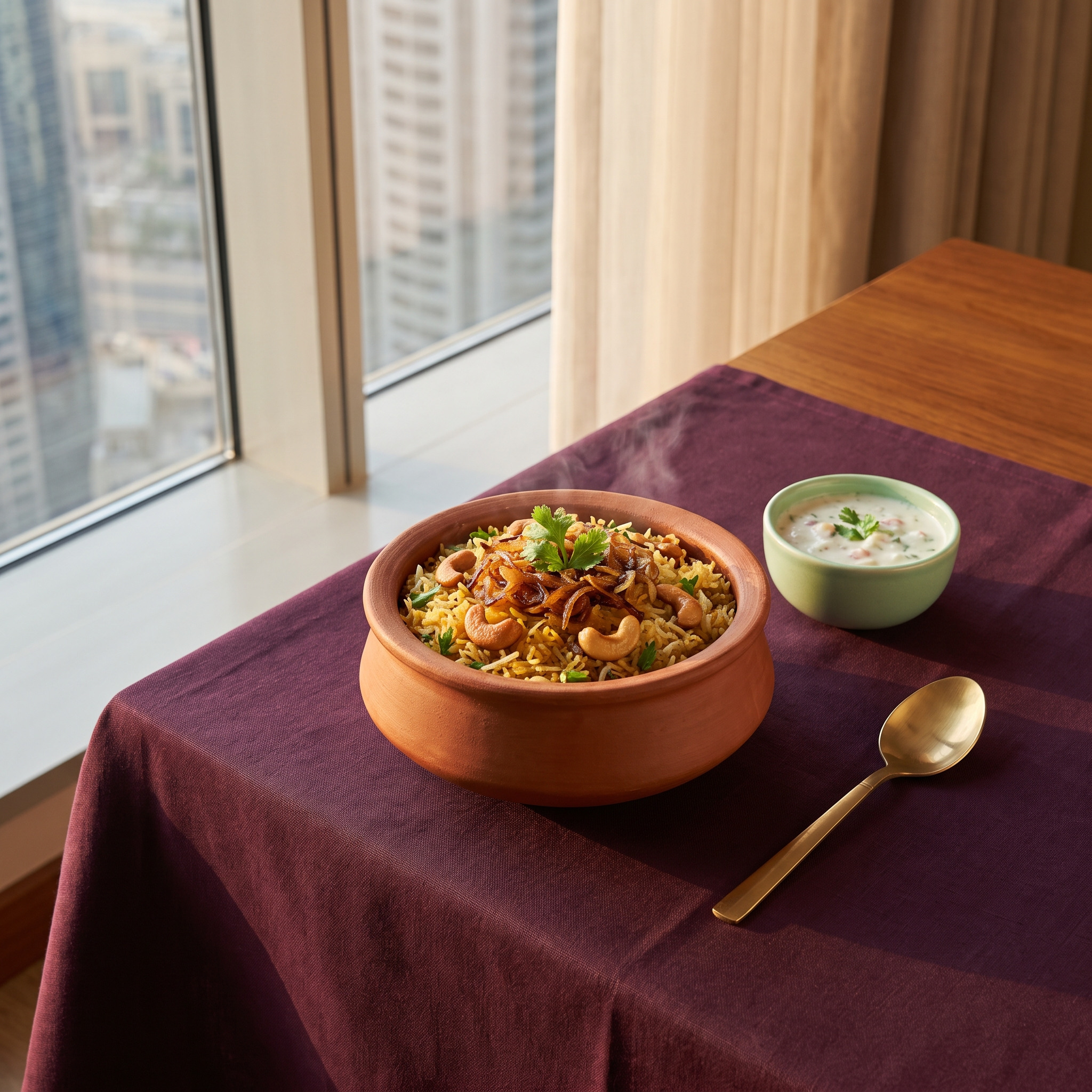 AI-generated image
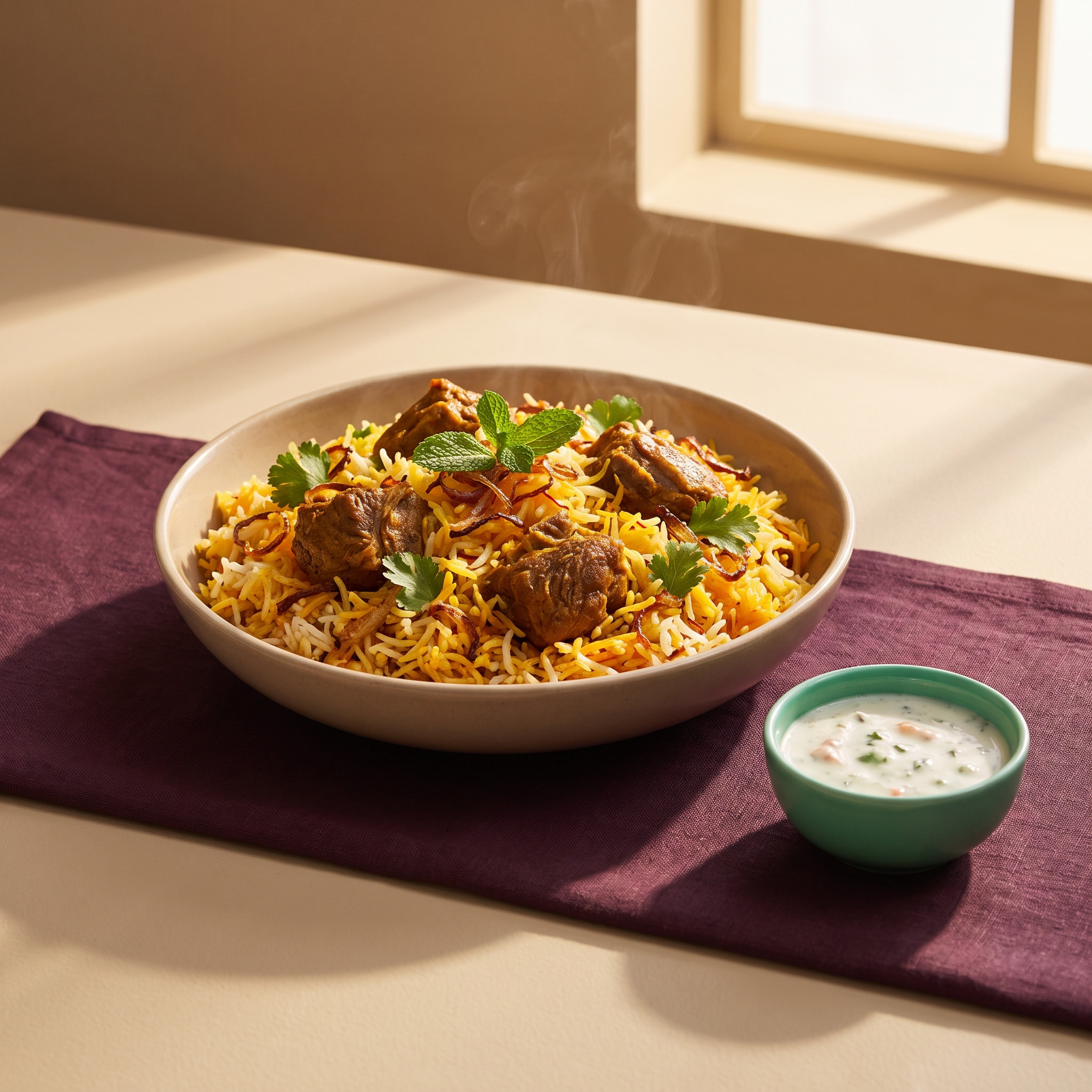 AI-generated image
 AI-generated image
 AI-generated image
 AI-generated image
 AI-generated image