
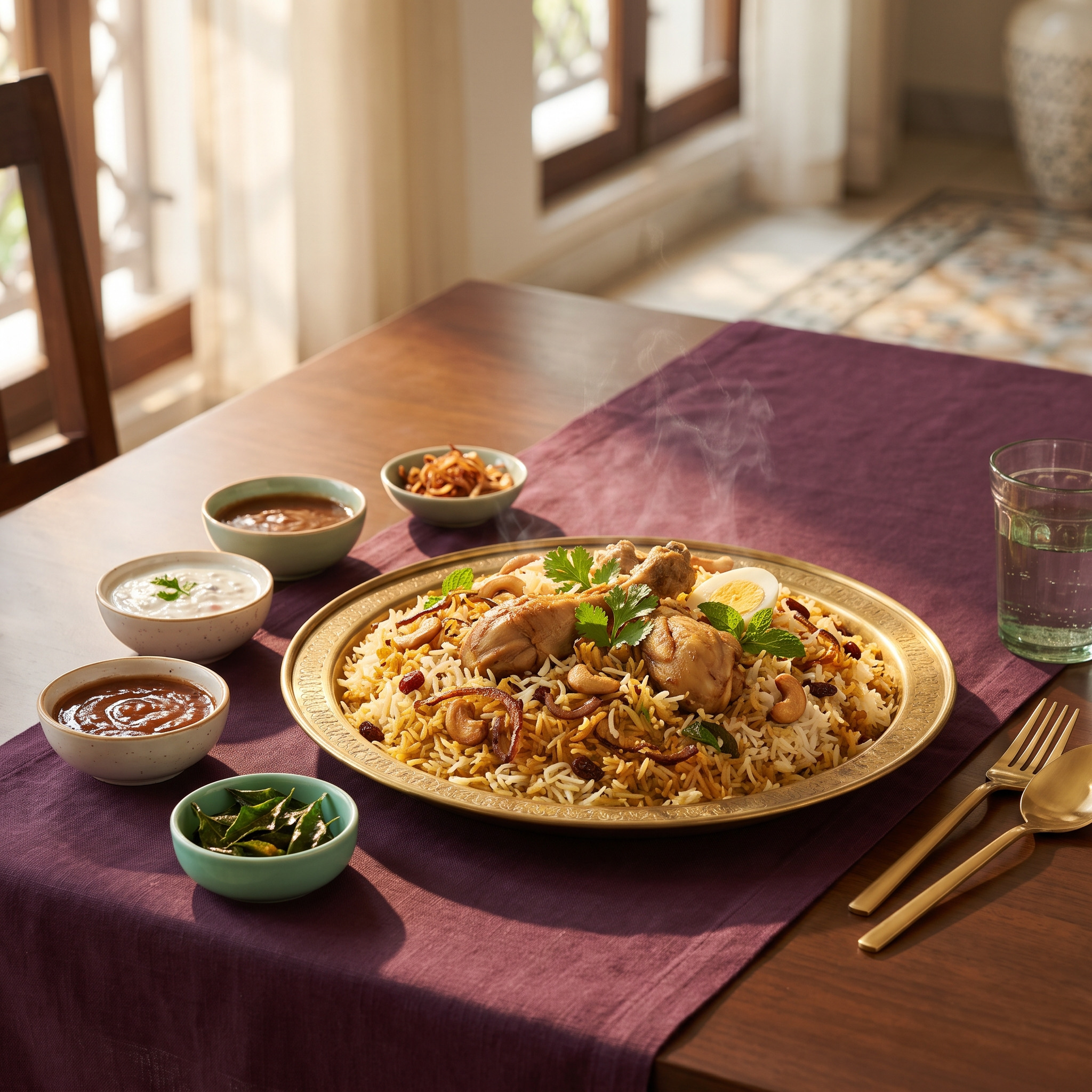
Thalassery biryani comes from the coastal Malabar region of northern Kerala and is strongly identified with kaima, also called jeerakasala, rice. For Dubai diners used to basmati biryani, the small grain is the first and most useful distinction.
Why kaima rice matters
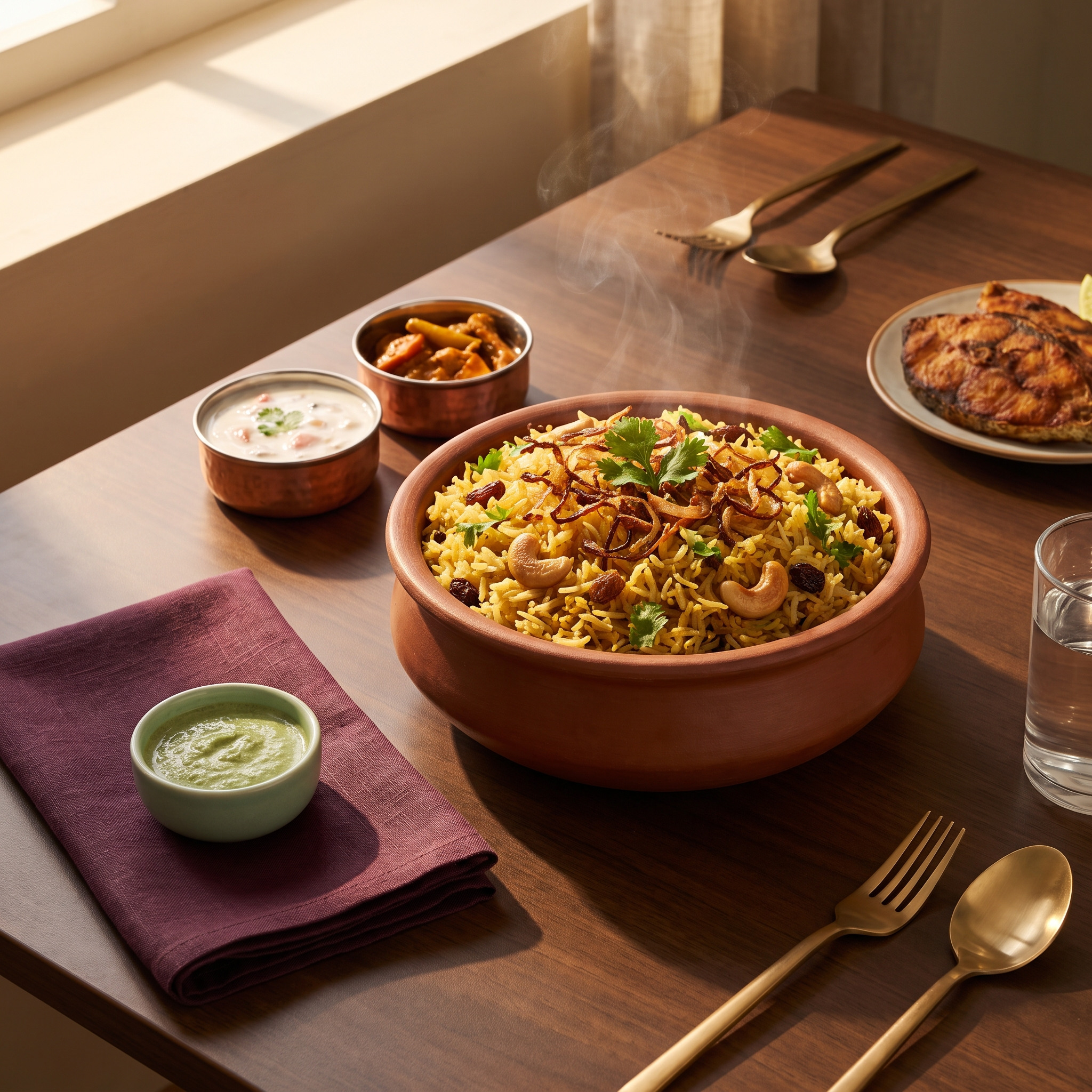
Kaima is short, slender and aromatic. It cooks into a compact but fragrant biryani that absorbs ghee and masala differently from long basmati. The grains should be cooked through without becoming heavy or mashed together.
How the components meet
In many Thalassery preparations, rice and meat masala are cooked separately before being combined for a covered finish. This allows the cook to control each component, then use the final stage to carry the meat aroma into the rice.
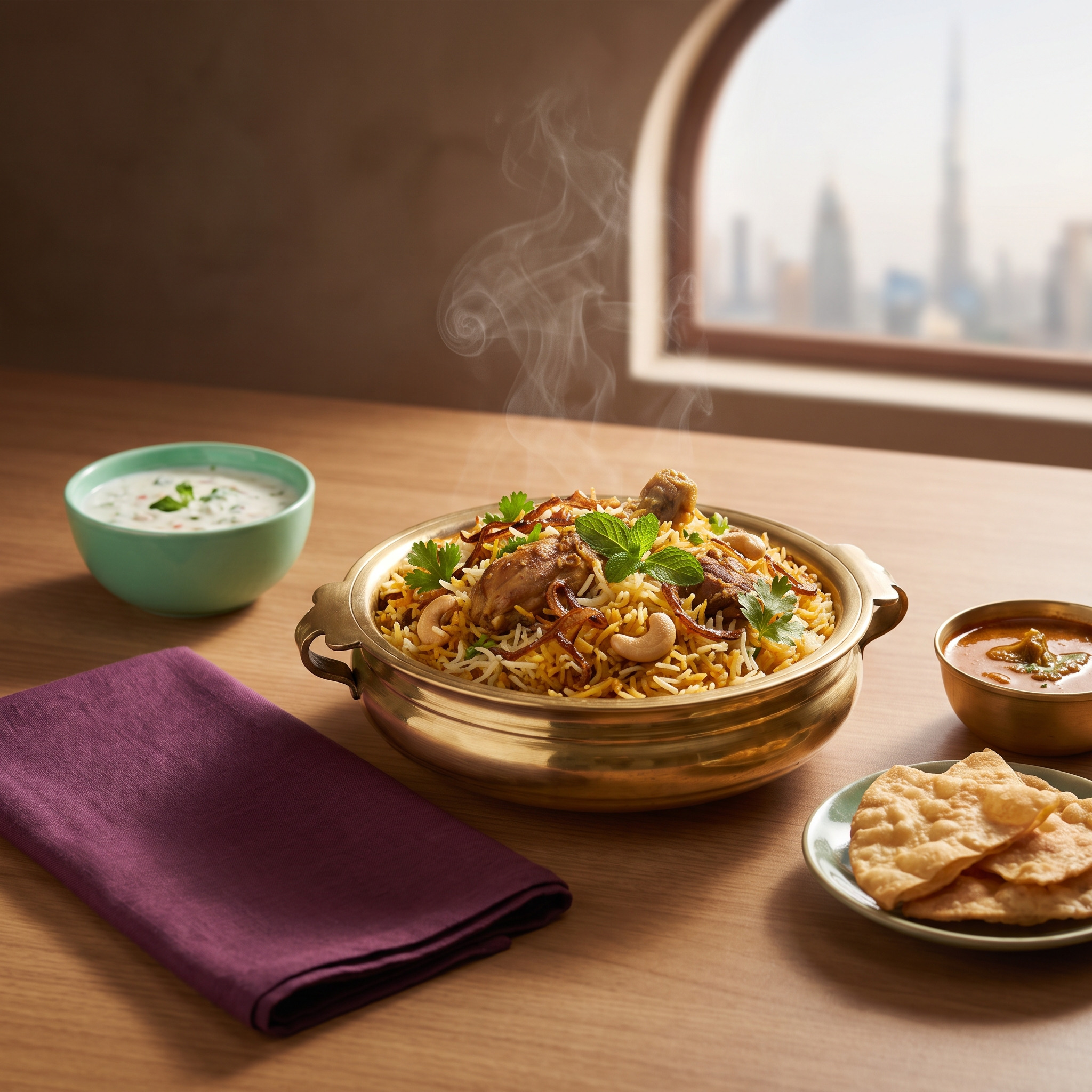
Fried onion, mint or coriander, cashews and raisins frequently finish the dish. The result may look paler than chilli-heavy biryanis, but pale colour does not mean a lack of flavour.
Thalassery versus a general Malabar menu label
Thalassery belongs to Malabar, so the terms overlap. A restaurant using “Thalassery” should ideally be able to identify kaima or jeerakasala rice and explain its house method. A menu saying only “Malabar biryani” may still serve a similar northern Kerala preparation.
See our broader Malabar biryani guide for the regional context.
Pairings and portion planning
Raita and pickle provide cooling and acidity. For two people, individual portions may be simpler than a family tray when you are trying the kitchen for the first time. A family pack becomes useful after you understand the restaurant's portion size and garnish.
Ordering in Al Qusais or Al Warqa
Ask whether the biryani is available throughout the day or cooked in timed batches. Small-grain rice can continue softening in a tightly sealed box, so serve it promptly. If reheating, sprinkle a small amount of water and warm it covered on low heat.
Continue with our guide to eight biryani styles.
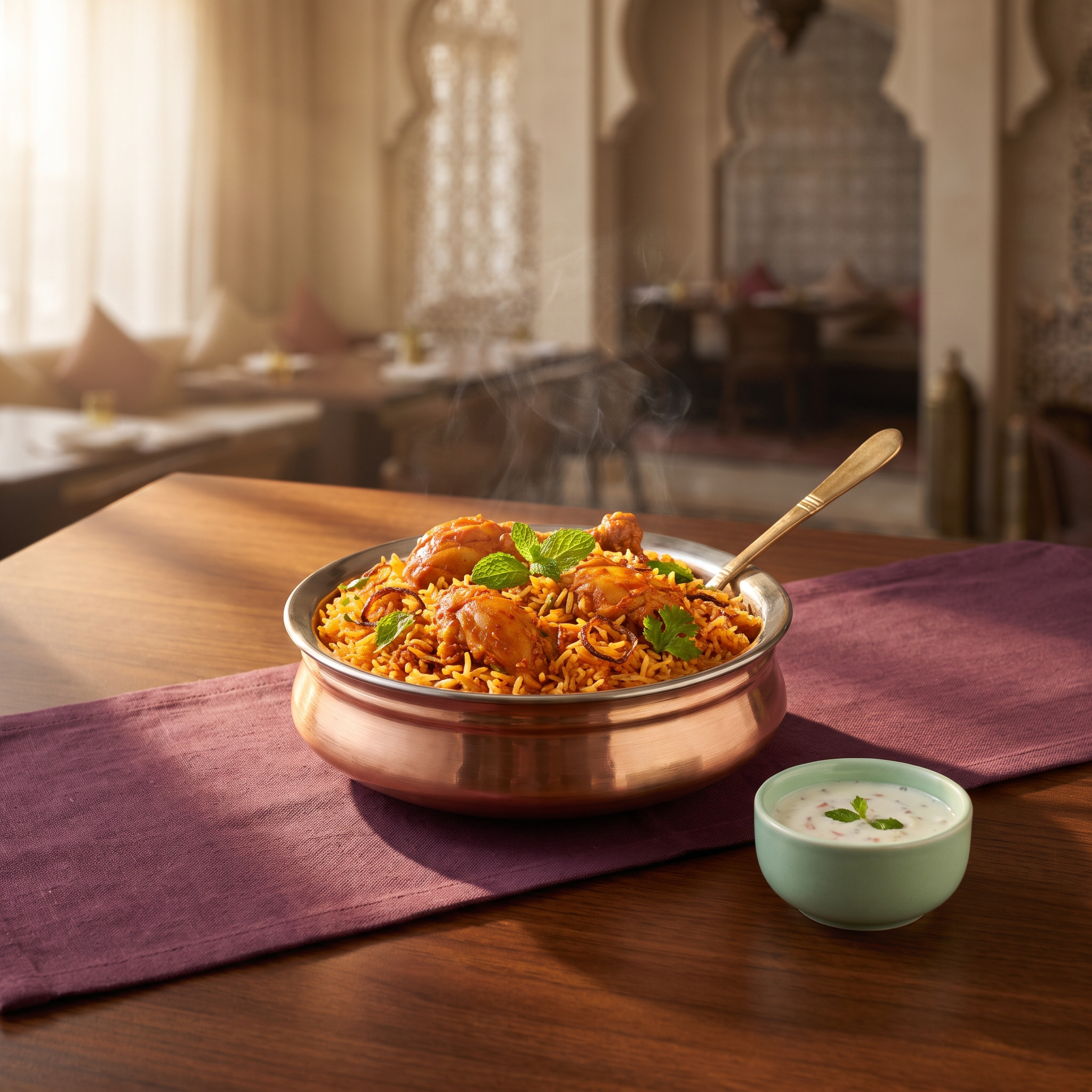 AI-generated image
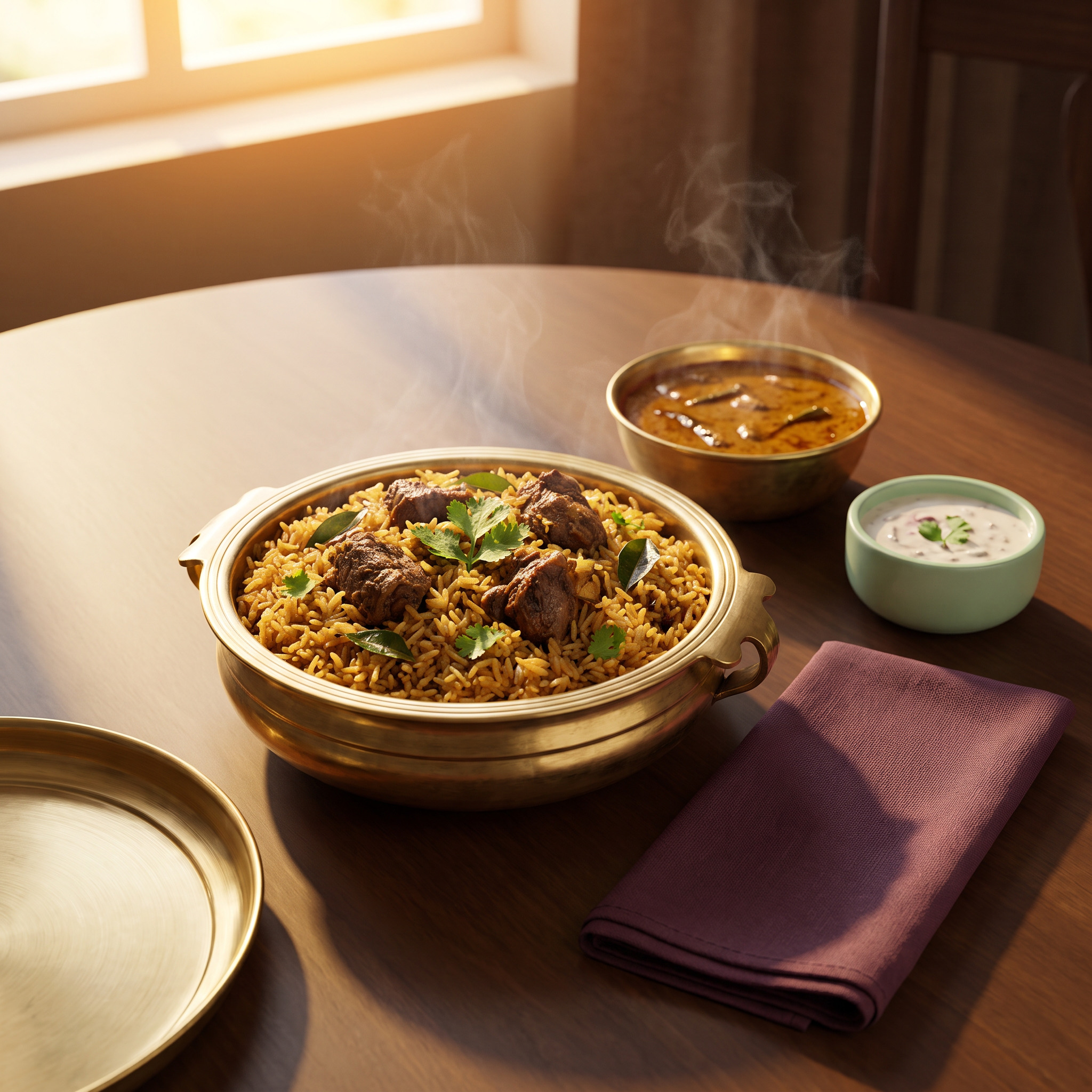 AI-generated image
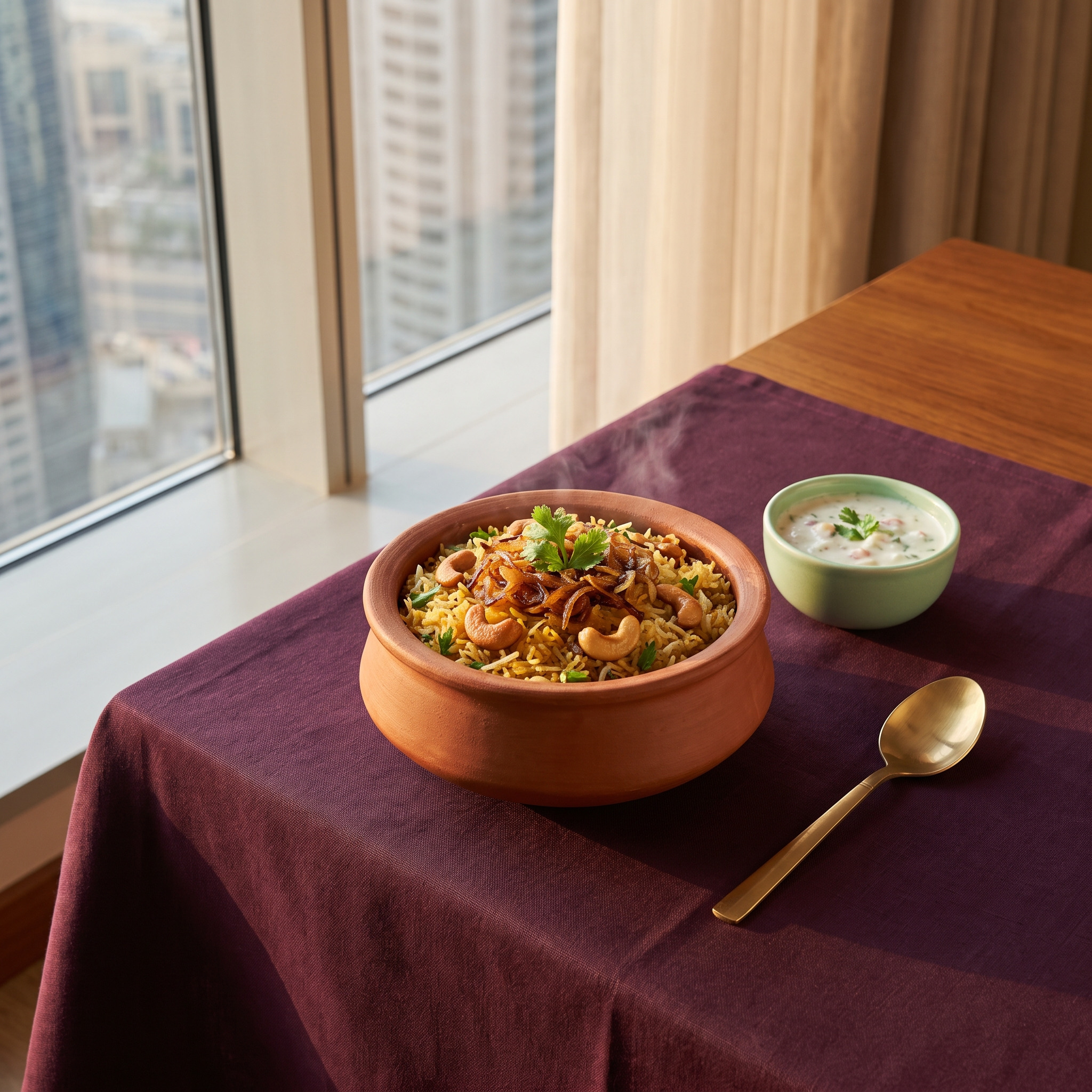 AI-generated image
 AI-generated image
 AI-generated image
 AI-generated image
 AI-generated image