
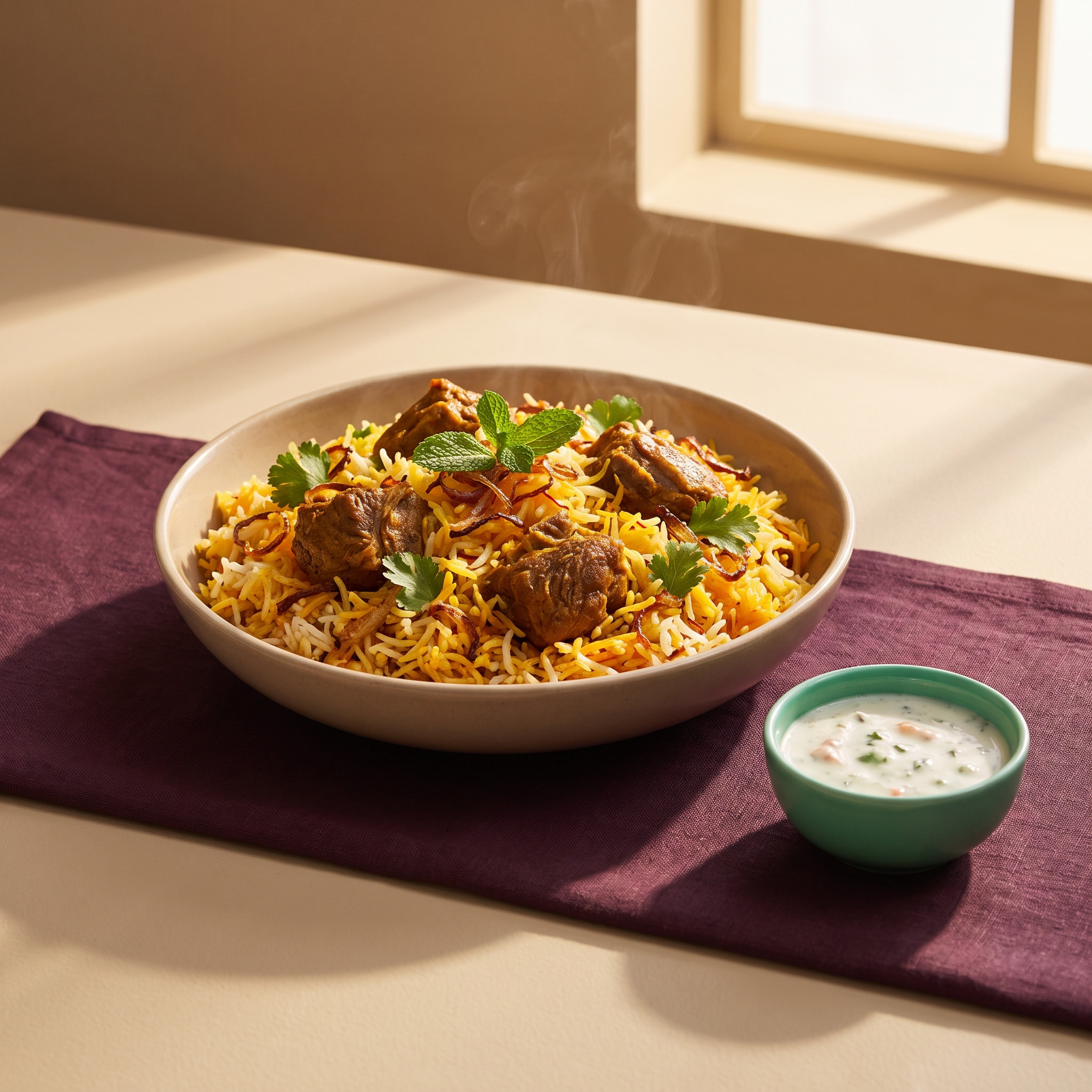
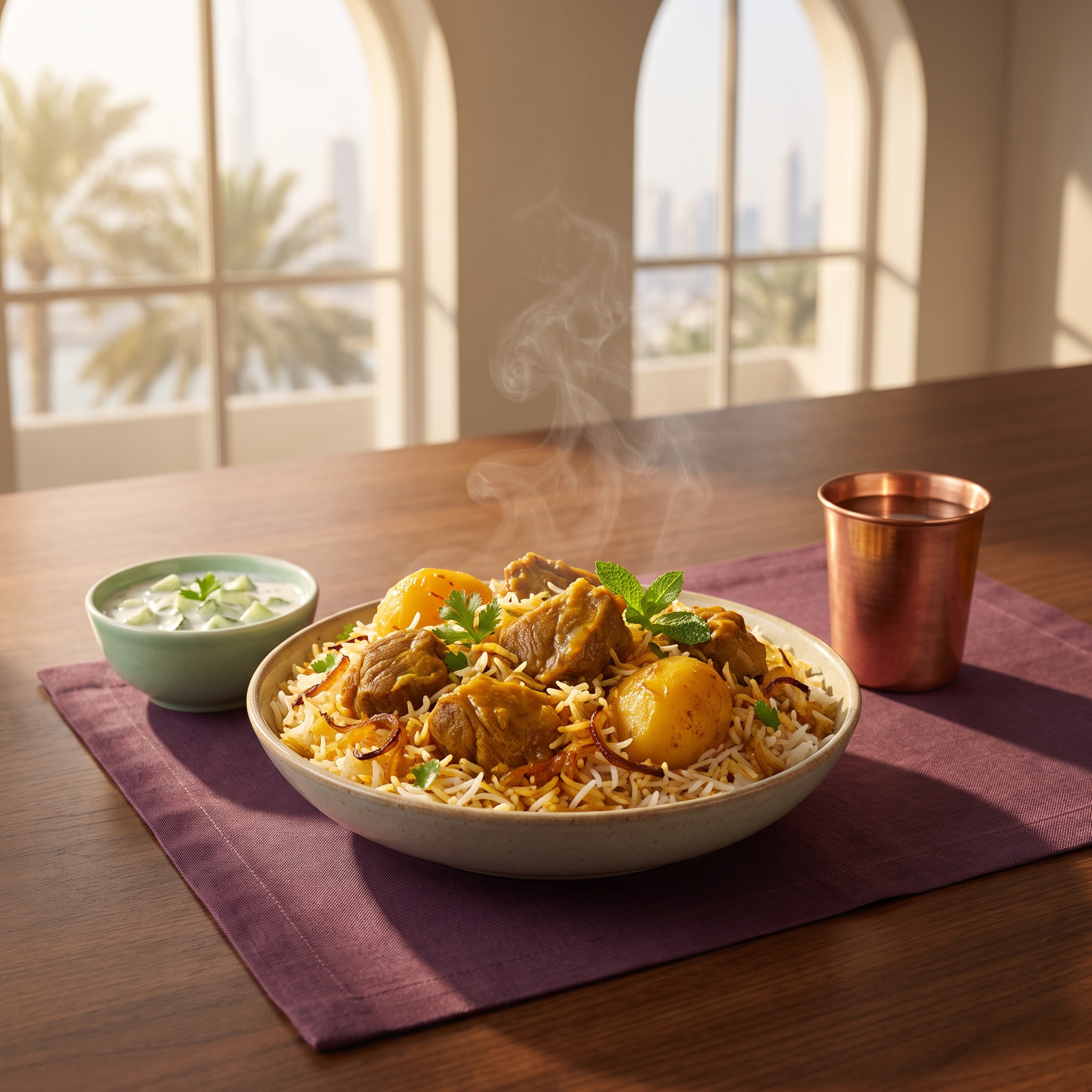
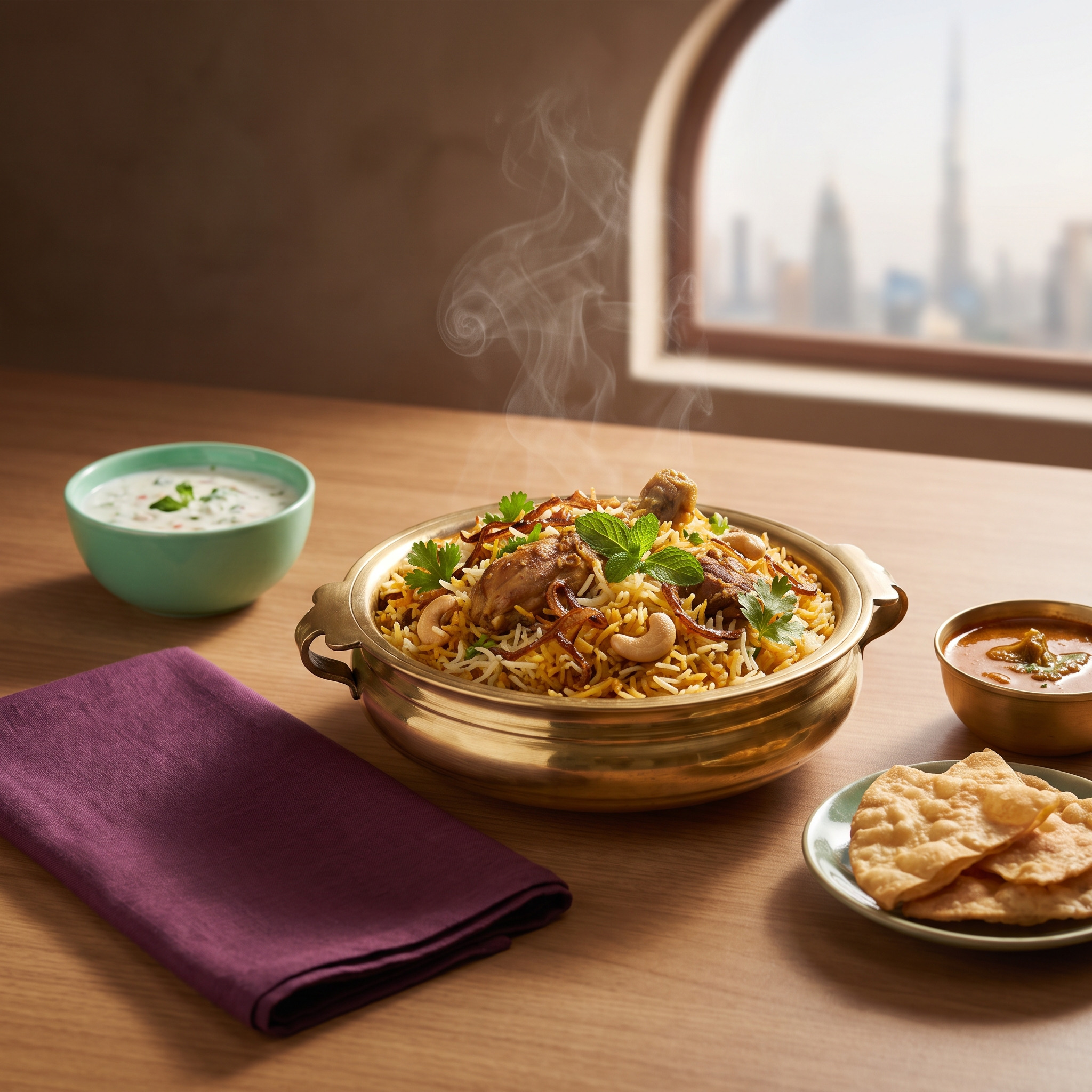
Hyderabadi biryani is the style many diners picture when they hear “dum biryani”: long basmati grains, marinated meat, fried onion, mint and a pot sealed to hold in steam and aroma. It can be bold, but its character comes from layering as much as heat.
Kacchi and pakki: two methods
In kacchi biryani, raw marinated meat is placed beneath partially cooked rice. The sealed pot must cook the meat and finish the rice at the same time, making timing and heat control essential.
Pakki biryani uses meat that has already been cooked before it is layered with rice and finished on dum. The method offers the cook more control over the meat, while the final covered stage still brings the layers together.
Neither label alone guarantees quality. The finished rice should remain distinct, the meat should be tender and the masala should flavour the plate without turning every grain into one uniform colour.
What does it taste like?
Expect basmati aroma, savoury meat, fried-onion sweetness and freshness from mint or coriander. Saffron or coloured milk may create pale yellow and white sections. Chilli level varies by kitchen, so ask rather than assuming every Hyderabadi biryani is extremely hot.
Common accompaniments
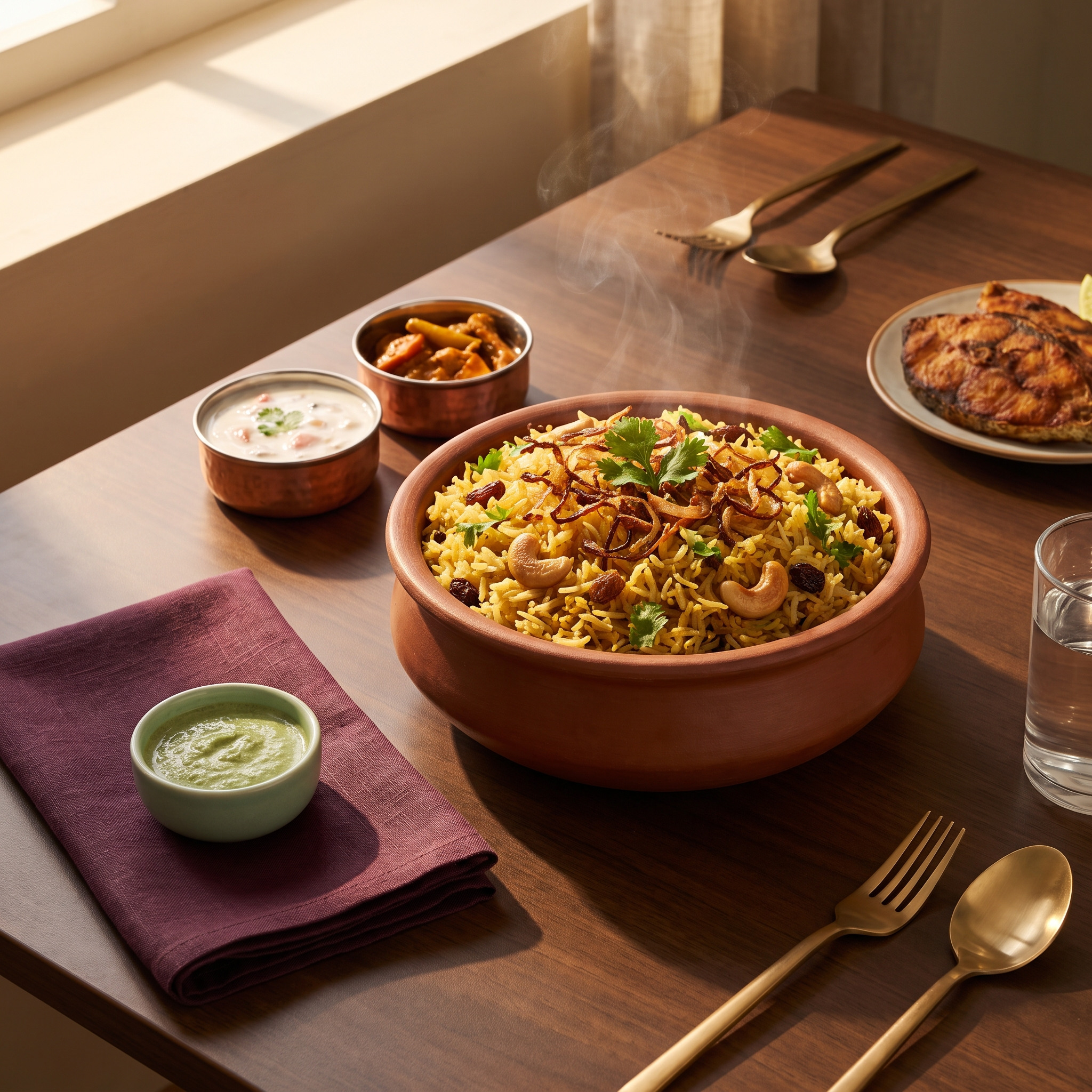
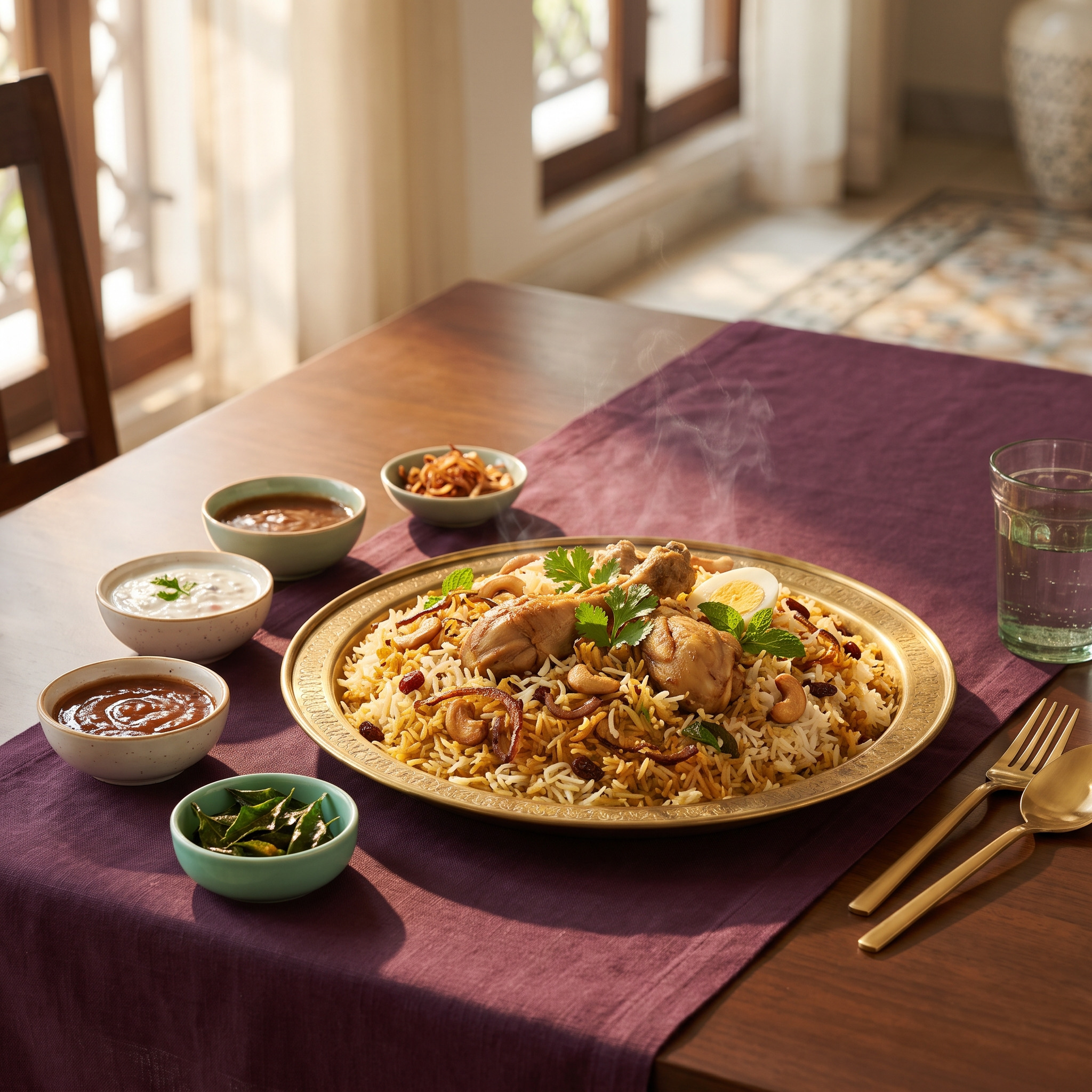
Mirchi ka salan brings chilli, peanut, sesame and tang in a loose curry, while onion or cucumber raita cools the plate. Use accompaniments selectively at first so you can taste the rice and masala on their own.
Ordering Hyderabadi biryani in Dubai
Ask whether the menu offers kacchi, pakki or simply the restaurant's house dum style. Check whether the portion includes salan and raita, and whether chicken or mutton is cooked bone-in. For delivery to Al Warqa or Al Qusais, open the box briefly on arrival to release trapped steam before fluffing the upper rice.
Compare it with Malabar biryani or see all eight biryani styles.
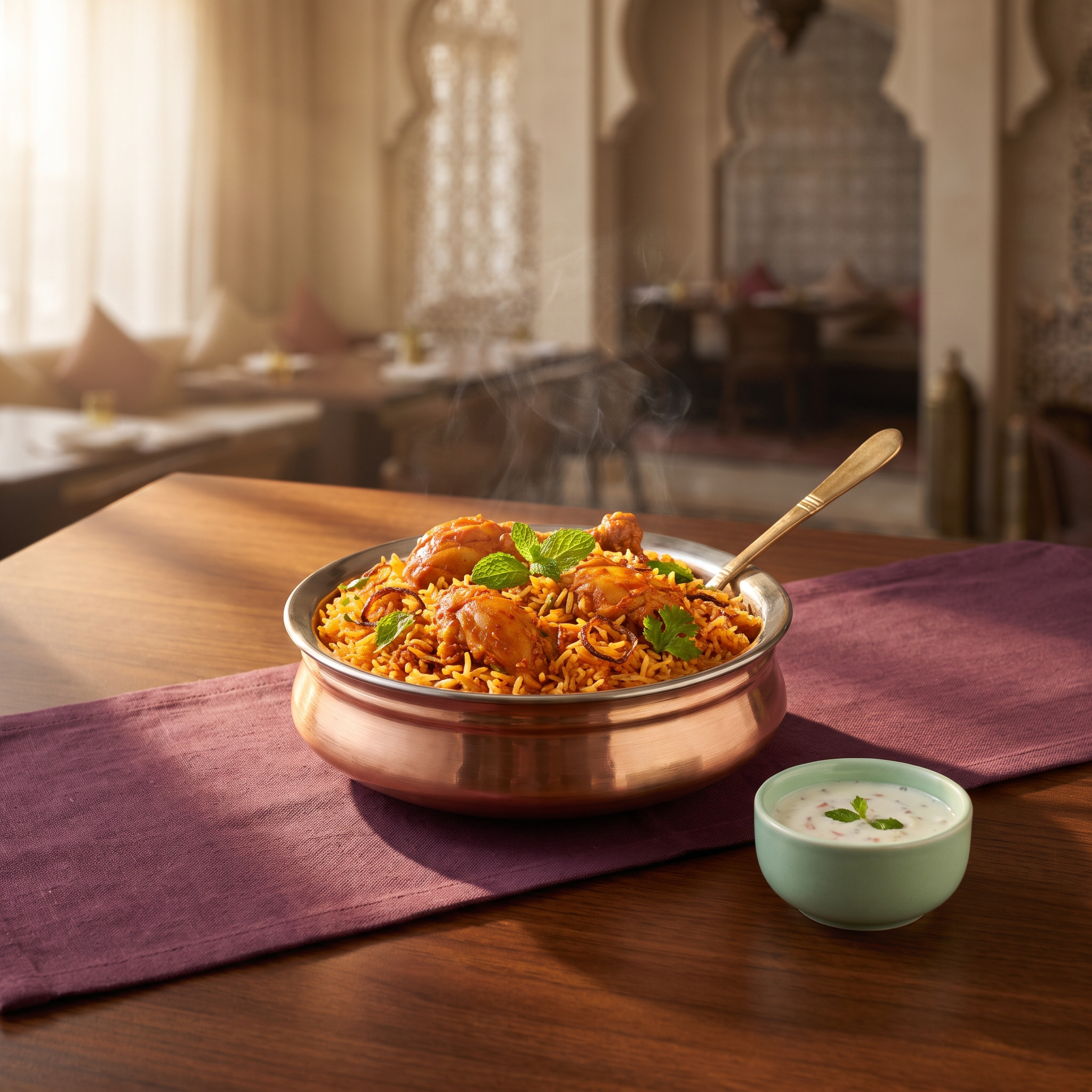 AI-generated image
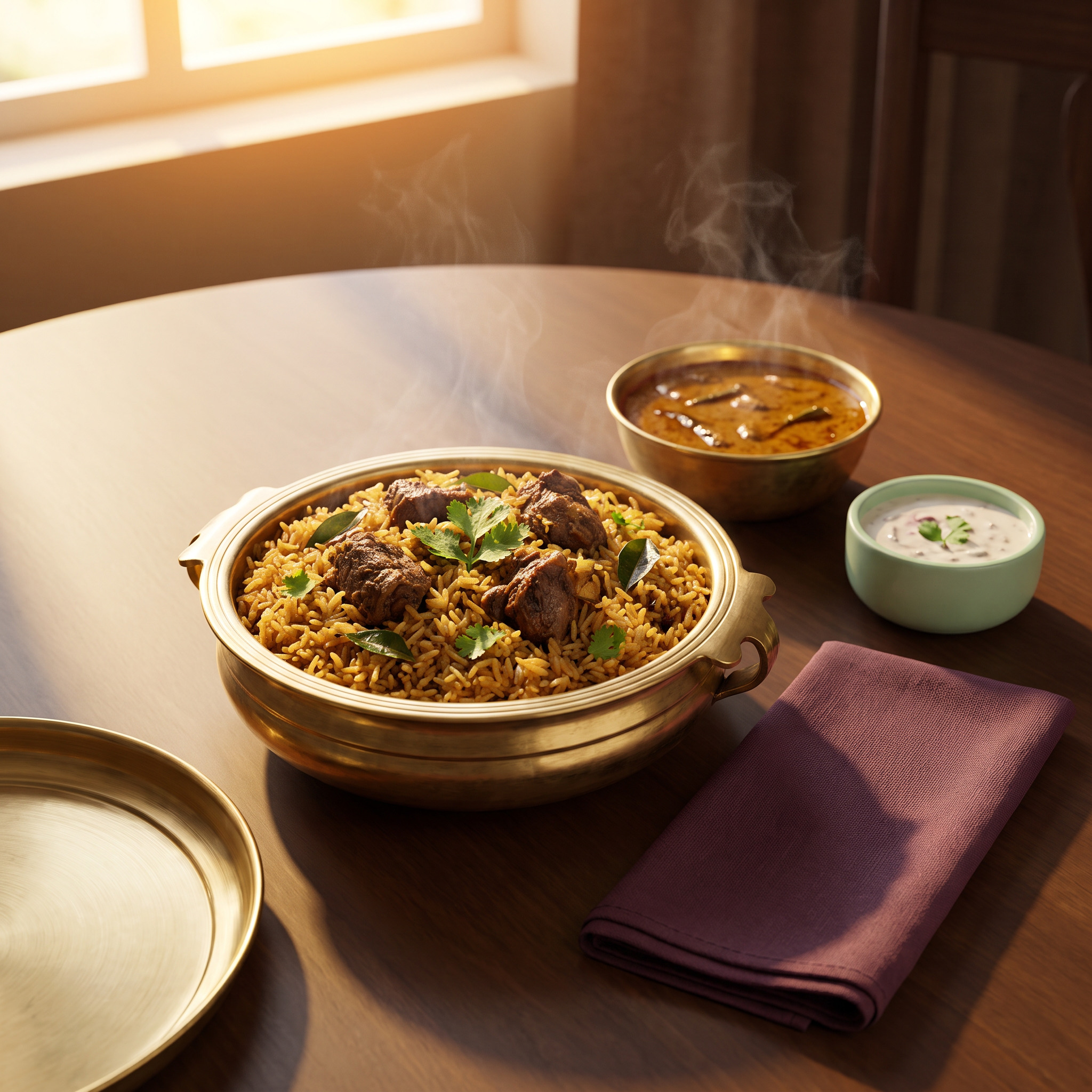 AI-generated image
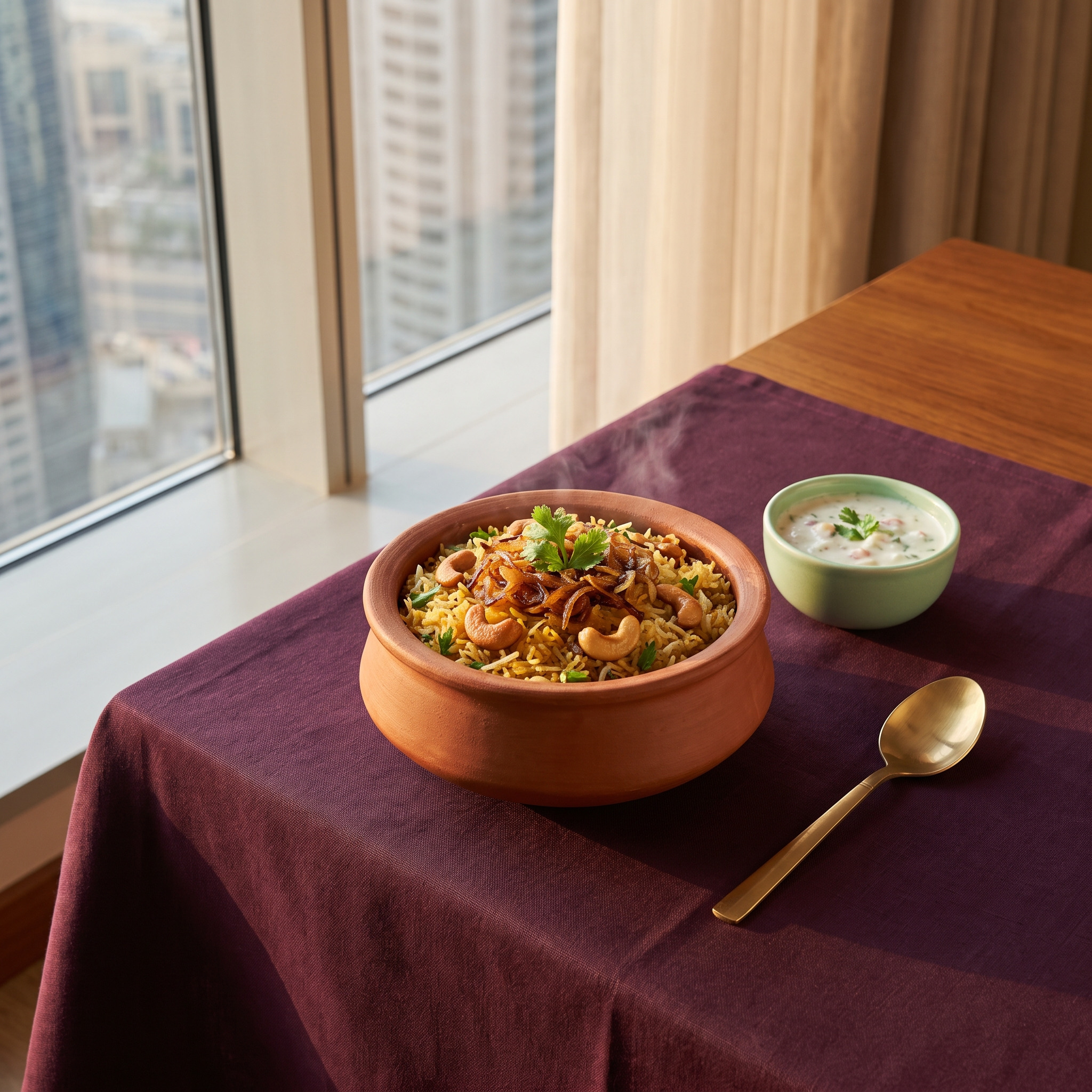 AI-generated image
 AI-generated image
 AI-generated image
 AI-generated image
 AI-generated image