
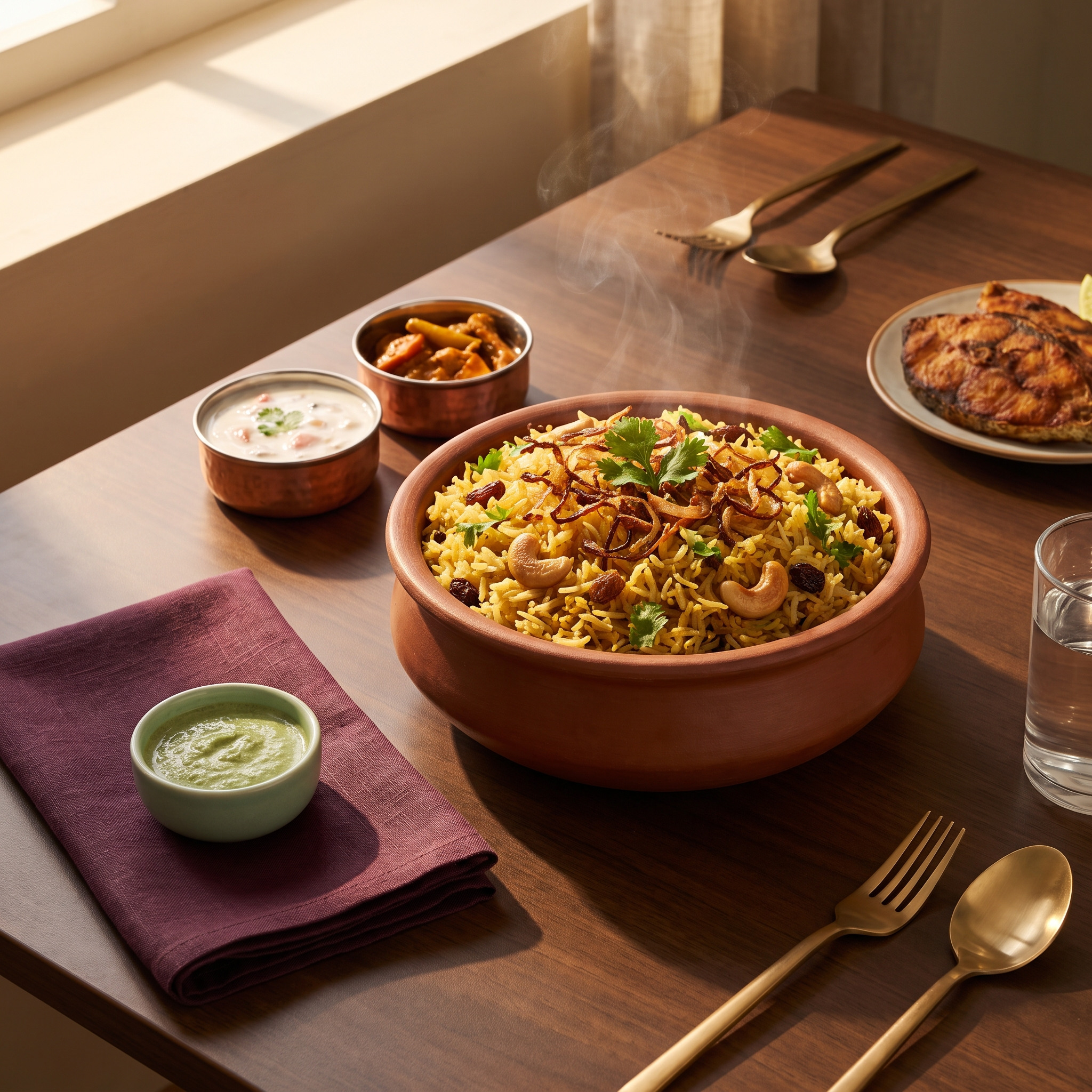
Malabar biryani reflects the food culture of Kerala's northern coast. Instead of making long basmati grains the centre of attention, it commonly uses small, fragrant kaima or jeerakasala rice that carries ghee, meat juices and warm spice.
The rice changes the whole plate
Kaima rice is short and slender rather than round and heavy. Its aroma is distinctive, and its smaller grains create a softer, more compact forkful than basmati. This does not make the biryani sticky: well-cooked grains should still feel separate and light.
A rounded flavour profile
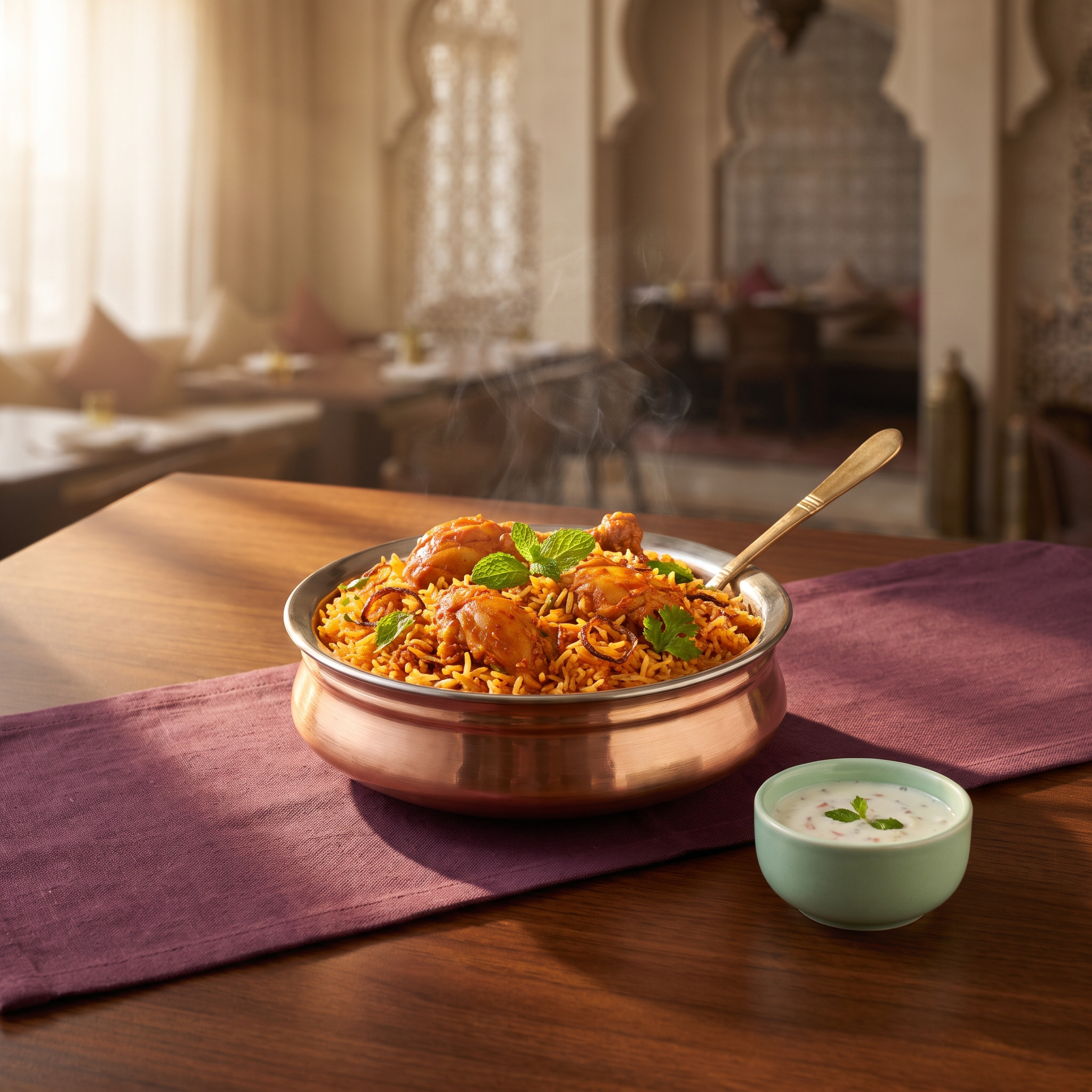
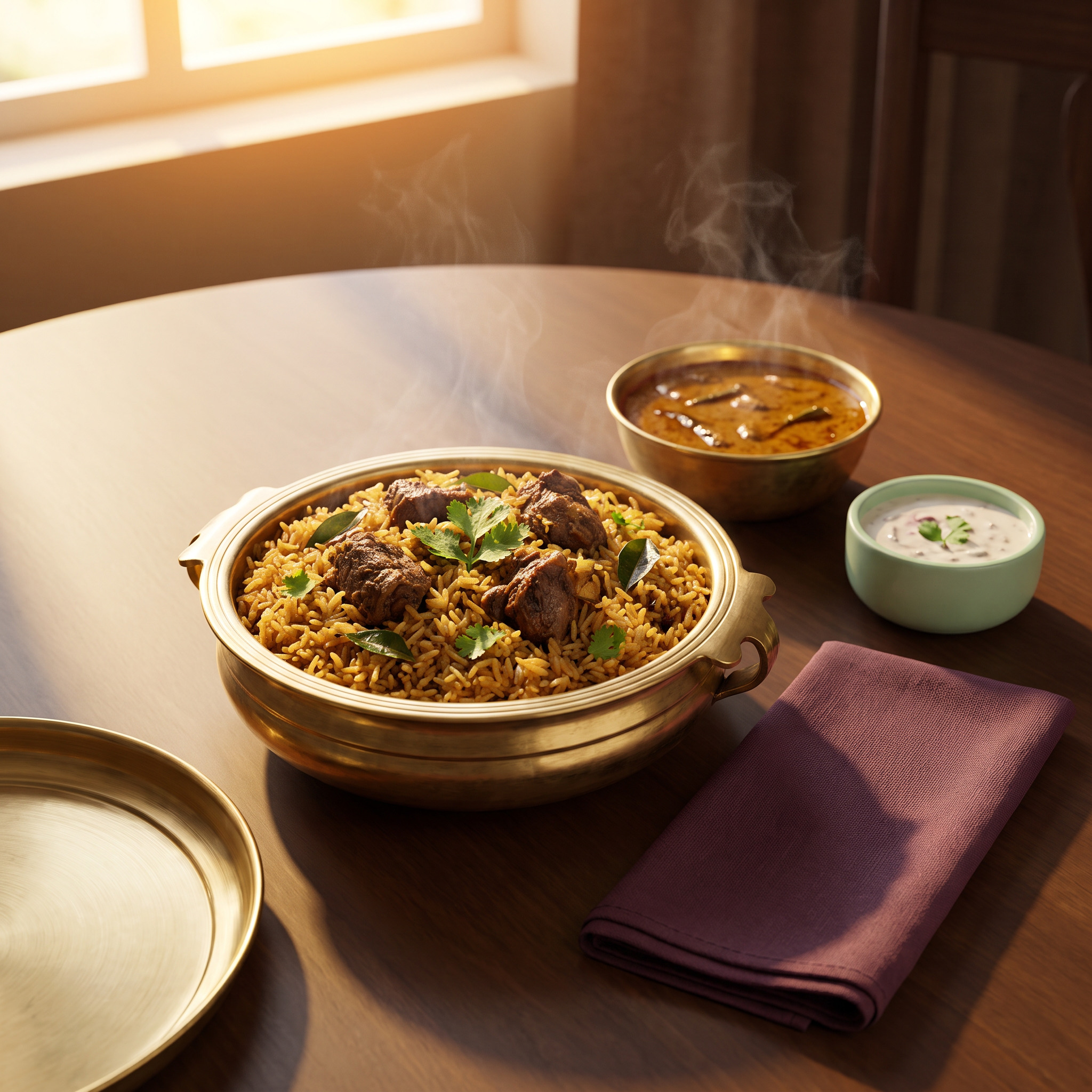
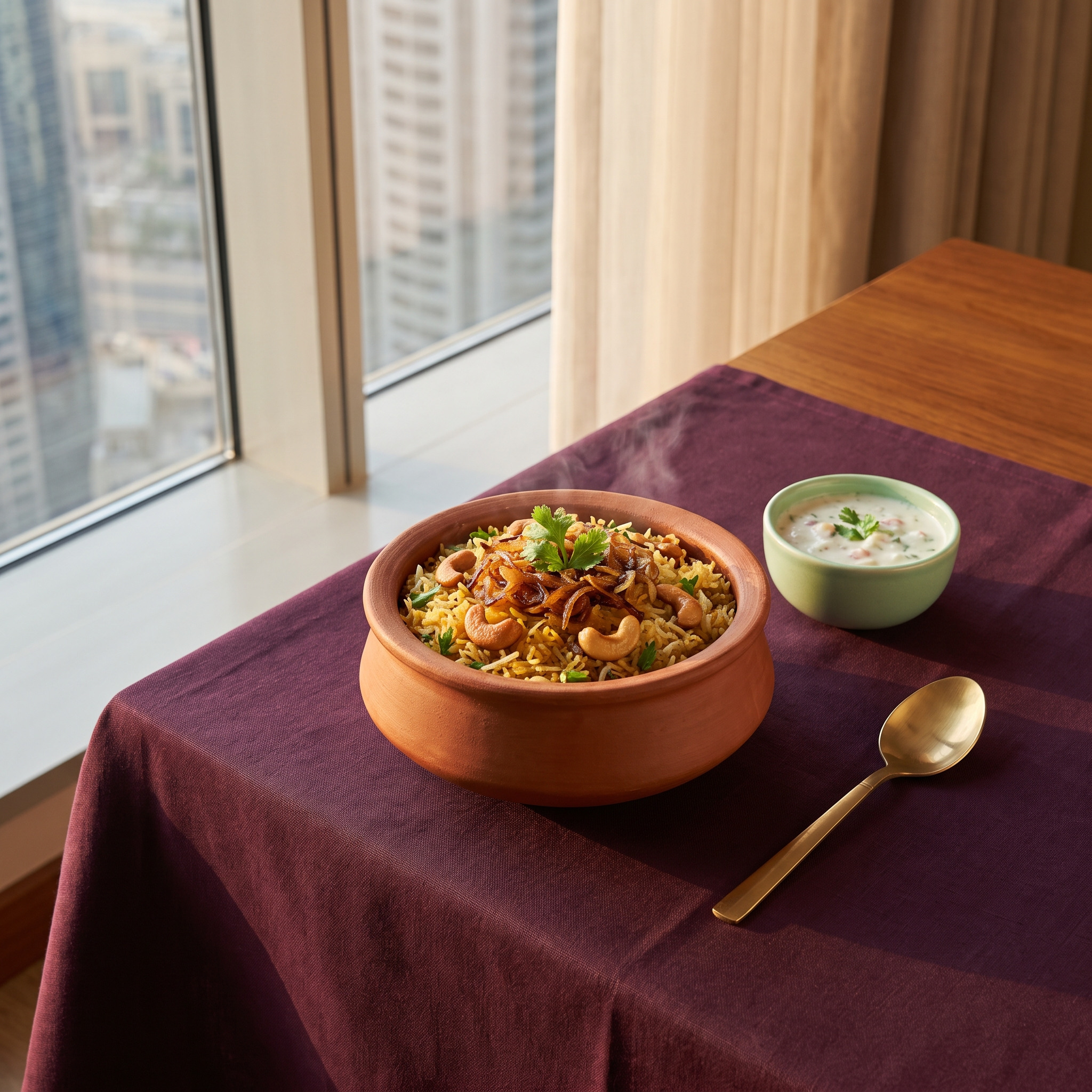
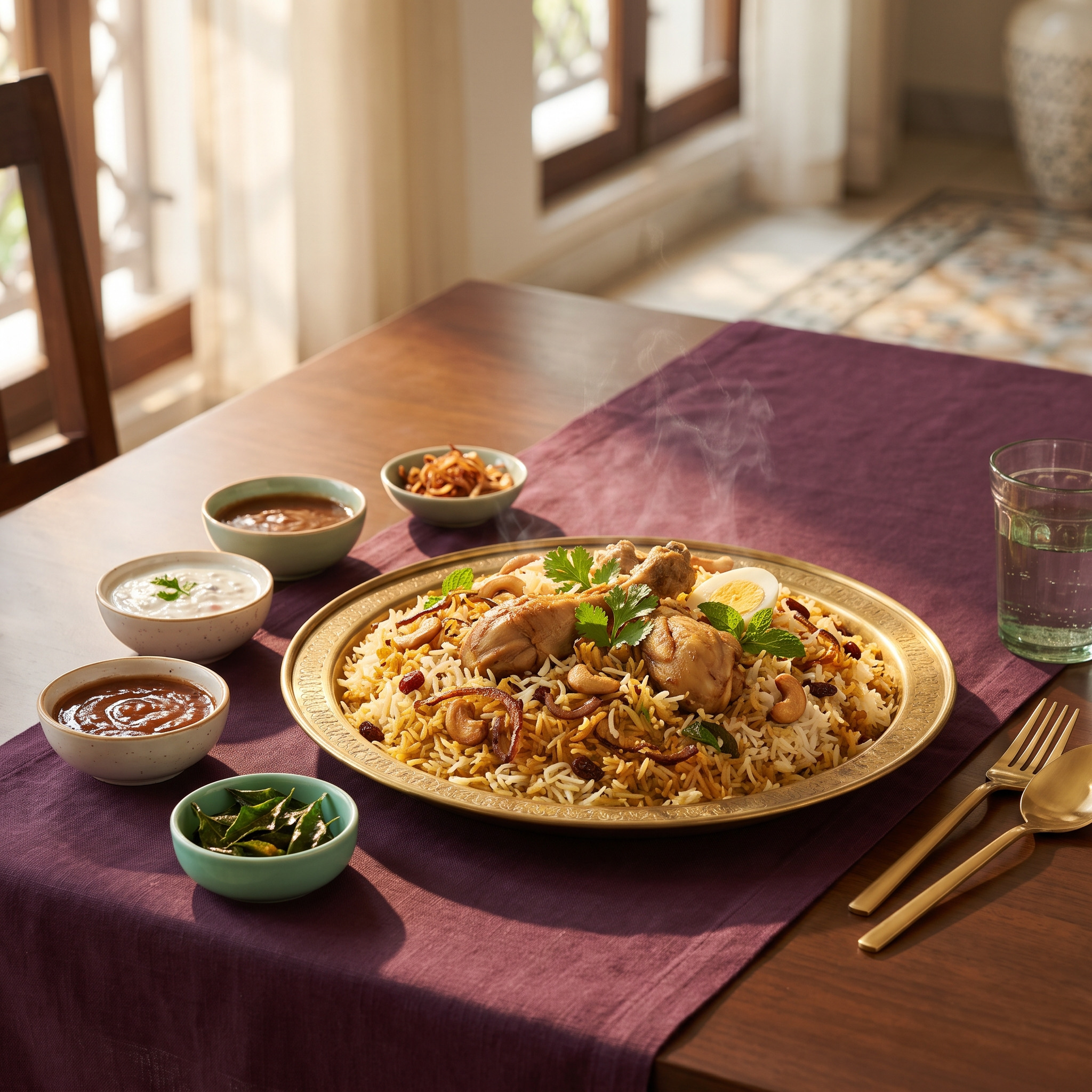
Fried onions, ghee, herbs, cashews and raisins often appear in Malabar preparations. Their savoury, nutty and lightly sweet notes create balance around chicken, mutton, fish or vegetables. The style can be aromatic without being dominated by chilli.
Recipes vary across the Malabar region and from one family or restaurant to another. Treat menu descriptions as useful clues, not rigid rules.
Malabar and Thalassery
“Malabar biryani” is often used as a broad regional description, while Thalassery biryani names a particularly recognised northern Kerala tradition. Both may use kaima rice, but an individual kitchen's masala, meat preparation and finishing method create the practical difference on your plate.
Read the dedicated Thalassery biryani guide for a closer comparison.
What to order with it
Raita, date or lime pickle and a coconut-based chutney are common companions. Taste the biryani before adding pickle because its acidity and salt can easily take over the smaller rice grains.
Ordering in Dubai
When browsing Dubai menus, look for the rice name and protein rather than relying only on “Kerala biryani.” Ask if a family pack includes boiled eggs, raita or pickle. For local delivery in Al Qusais or Al Warqa, keep the container upright and avoid shaking: small rice is more easily compressed.
For a long-grain contrast, compare Hyderabadi biryani, or explore all eight styles.
 AI-generated image
 AI-generated image
 AI-generated image
 AI-generated image
 AI-generated image
 AI-generated image
 AI-generated image